
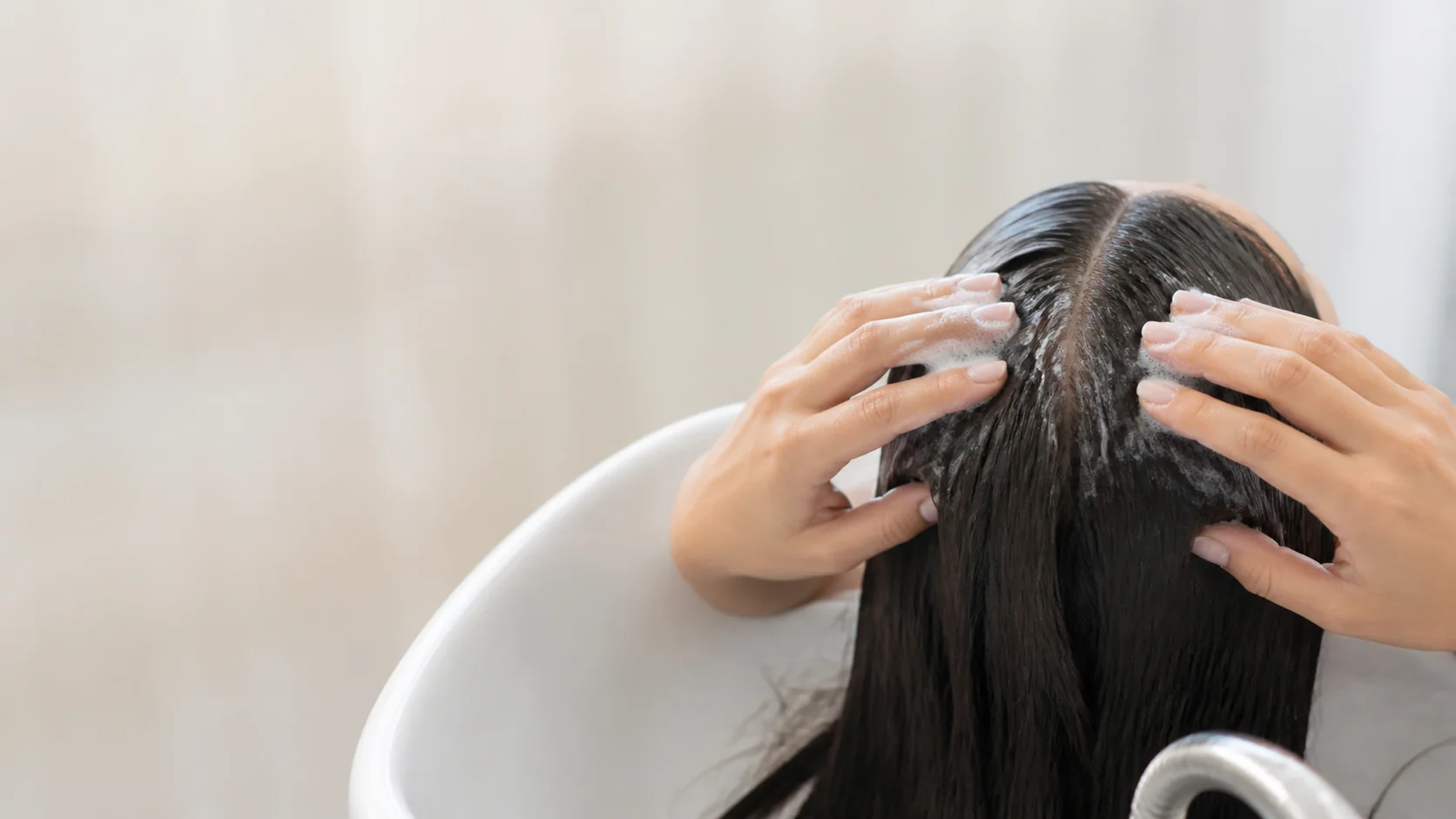
Learning how to remove dry shampoo buildup from the scalp starts with a proper wash using water and shampoo. Dry shampoo absorbs some surface oil, but it does not rinse away oil, sweat, dead skin, microorganisms, or styling residue. When layers accumulate, the roots can feel gritty, coated, itchy, heavy, or strangely greasy even after brushing.
For mild buildup, one careful shampoo is often enough. For heavier residue, you may need a second cleanse or an occasional clarifying shampoo. The goal is to clean the scalp thoroughly without scratching it, over-exfoliating it, or stripping the lengths.
What Dry Shampoo Buildup Looks and Feels Like
Dry shampoo is usually made with oil-absorbing powders or starches. Aerosol formulas also contain propellants and other ingredients that help distribute the product. These materials remain on the hair and scalp until they are washed away.
Possible signs of accumulated residue include:
- A powdery, waxy, or gritty feeling at the roots
- Hair that looks dull or pale near the scalp
- Roots that feel heavy shortly after washing
- Small particles that cling to the hair when you scratch or brush
- A scalp that feels tight, itchy, or uncomfortable
- Reduced volume despite using dry shampoo for lift
- Shampoo that does not lather well on the first wash
- An unpleasant scalp odor
Buildup does not always cause visible flakes. It may simply create a coated feeling that makes the hair difficult to style.
Dry Shampoo Residue, Dandruff, or a Dry Scalp?
Not every flake is dry shampoo. Product residue often appears after repeated application and tends to collect where the spray or powder was placed. It may improve significantly after a thorough wash.
Dandruff and seborrheic dermatitis can cause persistent flaking, itching, redness, and greasy or dry-looking scale. A dry or irritated scalp may feel tight and produce small flakes, especially after harsh cleansing or exposure to a fragranced product.
Stop using the dry shampoo if it causes burning, worsening itch, swelling, sores, or a rash. Seek advice from a dermatologist if symptoms persist, if you develop painful bumps, or if you notice unusual shedding or thinning. Clarifying repeatedly will not correct every scalp condition and may make irritation worse.
How to Remove Dry Shampoo Buildup From the Scalp
1. Stop adding more dry shampoo
Do not try to hide a coated scalp with another layer. Additional powder may absorb some oil temporarily, but it also gives your next wash more material to remove.
If practical, wait until wash time and leave the roots alone. Avoid piling on hairspray, texture powder, oil, or heavy styling cream.
2. Detangle the hair before washing
Gently remove knots before getting into the shower. Start at the ends and work upward so you do not pull residue and tangles into one tight mass. If your strands are delicate, use the gentle method in our guide to detangling fine hair without breakage.
Do not scratch the scalp with a comb. The purpose is to free the lengths, not scrape away product.
3. Saturate the scalp thoroughly
Rinse with comfortably warm water for at least a minute. Lift sections of hair so the water reaches the scalp rather than running only over the top layer.
Thorough saturation helps shampoo spread more evenly. Very hot water is unnecessary and may increase dryness or discomfort.
4. Apply shampoo to the scalp, not just the hair
Place shampoo into your palm, spread it between your hands, and apply it across several scalp areas. Focus on the hairline, crown, temples, and back of the head, especially where you normally use dry shampoo.
Use the pads of your fingertips to massage gently in small motions. Do not use your nails. Scratching can irritate the skin and does not make the cleanser work better.
5. Rinse longer than usual
Rinse until the water runs clear and the roots no longer feel slippery with cleanser. Separate dense sections with your fingers so water reaches the scalp.
Incomplete rinsing can leave shampoo residue that feels similar to the buildup you were trying to remove.
6. Decide whether you need a second cleanse
After rinsing, assess the roots. If the first shampoo barely lathered, the hair still feels coated, or you used several layers of dry shampoo, repeat the cleanse with a smaller amount of shampoo.
The second wash often lathers more easily because the first pass removed much of the surface oil and powder. You do not need to double shampoo every time. One effective wash is sufficient when the scalp feels clean.
7. Condition the lengths
Apply conditioner mainly from the mid-lengths to the ends unless the label says it is suitable for the scalp. Let it work for the recommended time, then rinse thoroughly.
This step is especially helpful after a clarifying wash because stronger cleansing can leave the lengths feeling rough. Choose a lightweight conditioner if your roots become flat easily.
8. Dry the scalp gently
Press water from the hair with a smooth microfiber towel or soft cotton T-shirt. Do not rub the roots vigorously.
Allow the scalp to dry fully. If you use a hair dryer, choose a comfortable low or medium heat setting and keep it moving.
Do You Need a Clarifying Shampoo?
A regular shampoo can remove mild dry shampoo buildup when it is distributed and rinsed properly. Start there if your scalp is sensitive, dry, curly, color-treated, or only lightly coated.
Consider an occasional clarifying shampoo when:
- Regular shampoo leaves the roots coated after a careful wash
- You frequently use dry shampoo, hairspray, wax, or texture powder
- The hair looks dull and does not respond to ordinary cleansing
- Your roots feel heavy even when they are freshly washed
- You are preparing to change to a simpler product routine
Follow the product directions. More is not automatically better. Strong clarifying products used too frequently can leave the scalp tight and the hair dry.
Clarifying Shampoo Versus Chelating Shampoo
Clarifying and chelating shampoos are not identical.
A clarifying shampoo is intended to remove oil and styling-product residue. A chelating formula is designed to bind certain minerals that can collect from hard water or swimming pools. Some products perform both jobs, but not every clarifier removes mineral deposits effectively.
If the problem started after swimming, our guide to protecting hair from chlorine explains how to reduce pool-related residue. If the hair remains rough, discolored, or coated after clarifying, hard-water minerals may be part of the problem.
Should You Use a Scalp Scrub?
A scalp scrub is optional. It is not required to remove dry shampoo, and aggressive scrubbing may irritate the skin or tangle the roots.
If you choose an exfoliating product, use one formulated for the scalp and follow its directions. Apply light pressure with your fingertips. Avoid homemade mixtures containing coarse salt, undissolved sugar, baking soda, or other abrasive particles that can be difficult to distribute and rinse away.
Do not combine several intensive methods in one session. A strong clarifying shampoo plus a gritty scrub plus an acidic rinse may leave the scalp uncomfortable.
What Not to Do
Do not scratch buildup off with your nails
Scratching may remove a few visible particles, but it can damage the skin and increase irritation.
Do not brush the scalp aggressively
A brush can distribute dry shampoo through the roots when it is first applied, but it is not a substitute for washing. Hard brushing against the scalp may cause discomfort and break fragile hairs.
Do not pour undiluted vinegar onto the scalp
Acidic DIY rinses can sting irritated skin, and inconsistent home mixtures make the strength difficult to control. A well-formulated shampoo is a more predictable starting point.
Do not apply oil to dissolve every type of buildup
Oil may soften some styling residue, but it adds another material that shampoo must remove. On an oily or sensitive scalp, it may make the roots feel heavier. If oiliness is a repeated concern, see our oily hair care routine.
Do not keep clarifying until the scalp squeaks
A squeaky or tight feeling is not proof of a healthier scalp. It can indicate that the cleansing routine is too harsh for you.
How to Adjust the Method for Your Hair Type
Fine or oily hair
Use a lightweight shampoo and conditioner. Concentrate shampoo on the scalp and conditioner on the ends. Rinse thoroughly because even a small amount of residue can reduce volume.
Curly or coily hair
Work in sections so cleanser and water reach the scalp without matting the lengths. Use enough slip during conditioning and detangle gently while the hair is wet and conditioned if that suits your curl pattern.
Color-treated hair
Choose a cleanser that is compatible with your color service. Strong clarifying products can accelerate fading for some hair colors. Start with a careful regular wash and clarify only when needed.
Dry, bleached, or damaged hair
Protect the lengths from unnecessary friction. Apply shampoo primarily to the scalp and allow the rinse water to carry suds through the ends. Follow with conditioner, and avoid combining clarification with high heat on the same day.
Protective styles
Dry shampoo can settle between braids or beneath extensions where it is difficult to brush away. Apply diluted cleanser or a scalp-safe wash along accessible parts, rinse carefully, and dry the base completely. Do not soak a style if you cannot dry it properly afterward.
What If the Scalp Still Feels Coated After Washing?
First, check your technique. The scalp may not have been fully saturated, the shampoo may have been applied mainly to the hair, or the rinse may have been too short.
At your next wash, try one of these changes rather than repeating every step immediately:
- Divide the hair into sections before wetting it
- Use a second small shampoo application
- Try an occasional clarifying formula
- Use a chelating product if hard water is a likely factor
- Reduce heavy conditioners and styling products near the roots
- Pause dry shampoo until the scalp feels normal
If the coating returns quickly with persistent itch, scale, bumps, pain, or hair loss, consider a professional scalp evaluation. What looks like buildup may be a skin condition that needs a different treatment.
How to Prevent Dry Shampoo Buildup
- Apply dry shampoo only to oily areas instead of covering the entire scalp.
- Use a small amount and add more only if necessary.
- Follow the product’s waiting time before brushing or combing.
- Avoid spraying too close to the scalp unless the label directs you to.
- Wash with water and regular shampoo after one or two dry-shampoo applications.
- Do not use dry shampoo as a permanent replacement for washing.
- Clean brushes and combs so they do not redistribute old residue.
- Switch products if one formula repeatedly causes itching or heavy buildup.
A Simple Reset Routine
- Pause dry shampoo.
- Detangle the lengths gently.
- Saturate the scalp with warm water.
- Massage regular shampoo across the scalp with your fingertips.
- Rinse thoroughly.
- Repeat only if the roots still feel coated.
- Condition the mid-lengths and ends.
- Dry the scalp completely.
- Wait until the scalp is comfortable before using dry shampoo again.
Frequently Asked Questions
Can regular shampoo remove dry shampoo buildup?
Yes. A careful wash with regular shampoo is often enough for mild residue. Heavy or repeated buildup may require a second cleanse or occasional clarifying shampoo.
How many times can I use dry shampoo before washing?
The American Academy of Dermatology reports that dermatologists generally recommend washing with shampoo and water after one or two dry-shampoo applications. Your scalp and the product directions may require a shorter interval.
Can dry shampoo cause an itchy scalp?
Accumulated product, fragrance, dryness, or sensitivity to an ingredient may contribute to itching. Stop using the product if it causes irritation and seek medical advice if symptoms persist or worsen.
Why does my shampoo not lather after using dry shampoo?
The first application may be interacting with oil and product residue. Rinse it away and use a smaller second application if the scalp still feels coated. Lather alone is not a perfect measure of cleanliness.
Can I use clarifying shampoo every wash?
That depends on the formula, your wash frequency, and your scalp and hair type. Many clarifying shampoos are intended for occasional use. Follow the label and reduce frequency if you notice dryness, tightness, fading, or irritation.
Does brushing remove dry shampoo?
Brushing helps distribute the product and remove some loose powder and absorbed oil. It cannot wash away the full mixture of product, sebum, sweat, and skin debris.
The Bottom Line
Dry shampoo is a temporary oil absorber, not a waterless replacement for cleansing. Start with a thorough regular shampoo, rinse carefully, and repeat only when needed. Reserve clarifying shampoo for stubborn residue, protect the lengths with conditioner, and avoid scratching or harsh DIY exfoliation.
A smaller amount of dry shampoo and regular washing will usually prevent the problem from returning. Persistent itching, redness, sores, bumps, or shedding deserve professional attention rather than stronger scrubbing.