
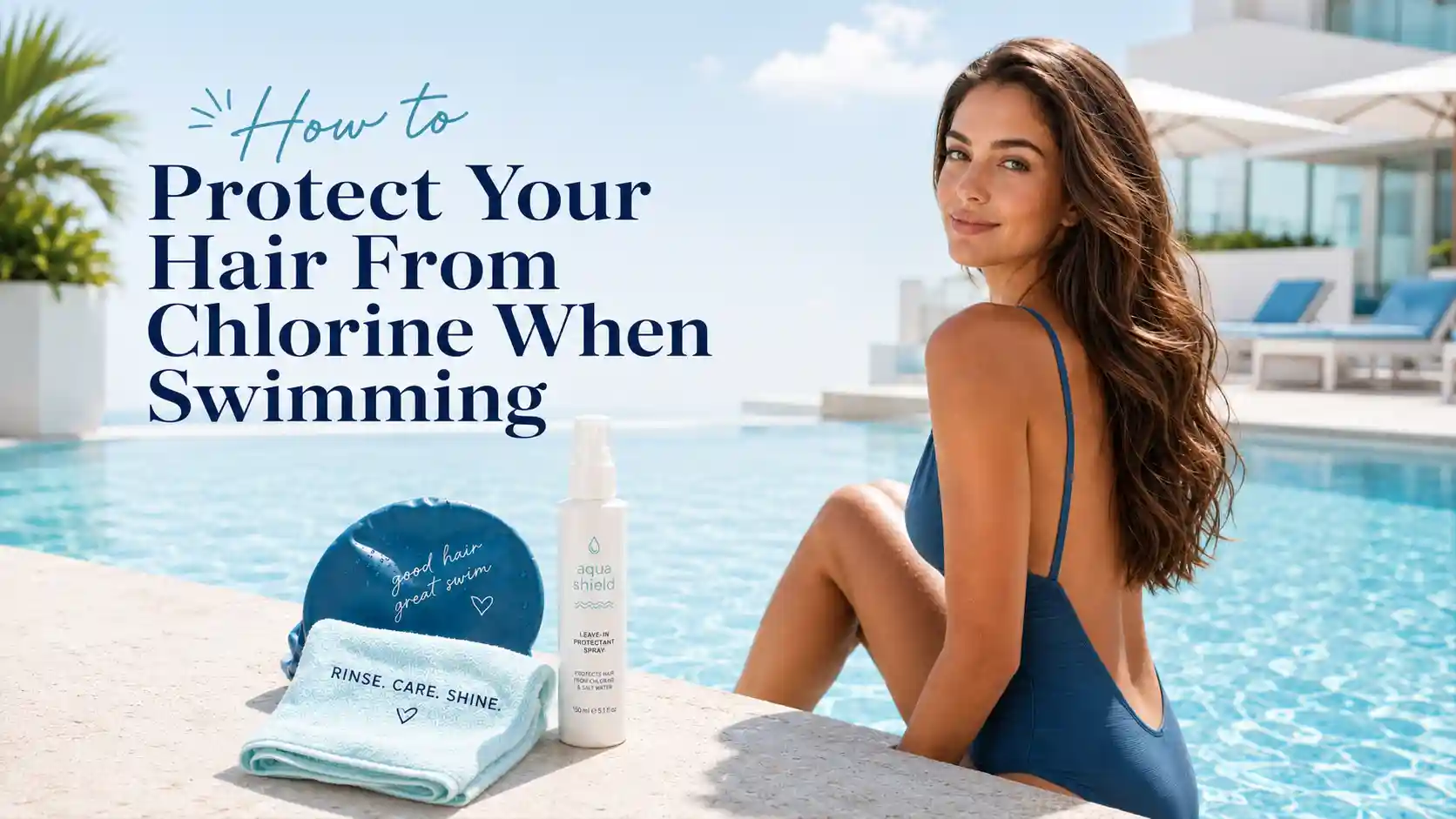
A day at the pool is fun until your hair comes out feeling like straw and smelling like a chemistry lab. That dry, squeaky texture after swimming is chlorine doing its job on your hair instead of just the water. The good news is you do not have to choose between swimming and healthy hair. This guide covers how to protect your hair from chlorine before, during, and after a swim, so you can enjoy the pool without paying for it with damaged strands.
Why Chlorine Damages Hair
Chlorine is added to pools to kill bacteria, but it does not know the difference between germs and your hair cuticle. It strips away natural oils, which leaves hair feeling dry and rough. Repeated exposure can weaken the hair shaft over time, leading to brittleness and split ends.
Chlorine can also react with copper and other metals found in some pool systems. This is usually the real cause of the greenish tint some swimmers notice, especially on light or color-treated hair. Darker hair is not immune to damage, it just shows the effects differently, usually as dryness rather than discoloration.
Before You Get In the Pool
Wet Your Hair With Clean Water First
Hair works a bit like a sponge. If it is already saturated with clean water before you swim, it absorbs less chlorinated pool water. A quick rinse under a shower or hose before jumping in can make a real difference.
Apply a Leave-In Conditioner or Hair Oil
Coating your hair with a leave-in conditioner or a light oil creates a barrier between your strands and the chlorine. This does not block chlorine completely, but it reduces how much the hair absorbs. Focus on the mid-lengths and ends, where hair tends to be driest.

Wear a Swim Cap
A swim cap is the most direct way to limit chlorine contact. It works well for swimmers who want maximum protection or swim frequently, such as those doing regular laps. It may feel unnecessary for a casual swimmer taking an occasional dip, but for anyone swimming several times a week, it is worth considering.
While You’re Swimming
Try to avoid keeping your hair fully submerged for extended periods when it is not necessary. Short breaks at the surface reduce total exposure time.
If you swim laps or train regularly, consistency matters more than any single session. Building a habit of pre-wetting hair and using a leave-in product before each swim adds up to noticeably less damage over weeks and months, compared to skipping protection some days.
After You Get Out
Rinse Immediately With Fresh Water
The sooner you rinse chlorinated water out, the less time it has to sit on your hair and continue drying it out. A rinse right after swimming, even without shampoo, helps remove surface chlorine before it settles in.
Use a Clarifying or Chelating Shampoo
A clarifying or chelating shampoo helps remove chlorine buildup and mineral deposits that regular shampoo may not fully clear. These shampoos can be effective, but they are also stronger than daily formulas. Using one after every single swim session may strip too much natural oil, so many swimmers use them once or twice a week and follow a gentler routine on other wash days.
Deep Condition or Use a Hair Mask
Chlorine exposure calls for extra moisture. A deep conditioning treatment or hair mask once or twice a week can help replace lost hydration and keep hair from feeling brittle.
Let Hair Air Dry When Possible
Heat styling right after swimming adds more stress to hair that is already dealing with chlorine exposure. Air drying, or at least letting hair rest before reaching for a hot tool, gives it a chance to recover.
Helpful Products for Swimmers
Leave-In Conditioner Spray
Short Summary
A lightweight leave-in spray applied before swimming to help reduce chlorine absorption.
Why It Makes Sense
Coating hair with a protective layer before it contacts pool water is one of the simplest preventive steps. It works well as a quick pre-swim habit that takes only a few seconds.
Best For
Swimmers who want an easy, low-effort protective step before getting in the pool.
Avoid If
You have very fine hair that feels weighed down by leave-in products, in which case a lighter formula or a small amount applied only to the ends may work better.
Silicone Swim Cap
Short Summary
A cap designed to reduce direct water contact with hair during swimming.
Why It Makes Sense
For frequent swimmers, a swim cap offers the most consistent protection since it limits how much chlorinated water reaches the hair in the first place.
Fact Check
Based on typical swim cap designs, silicone caps tend to offer a tighter seal than latex, though fit can vary by head size and hair thickness. Buyers should check sizing details before purchase.
Best For
Regular lap swimmers or anyone swimming multiple times a week.
Avoid If
You swim only occasionally and find caps uncomfortable, since the trade-off in comfort may not be worth it for infrequent use.
Clarifying Shampoo
Short Summary
A deeper-cleaning shampoo meant to remove chlorine and mineral buildup.
Why It Makes Sense
Regular shampoo may not fully clear chlorine residue, especially after frequent swimming. A clarifying formula targets that buildup more effectively.
Fact Check
Clarifying shampoos are generally formulated to be stronger than daily-use shampoos. Buyers should follow usage instructions and avoid daily use unless the product is specifically labeled for that.
Best For
Swimmers noticing dryness, dullness, or a green tint after pool sessions.
Avoid If
Your hair is already very dry or color-treated and sensitive to stronger cleansers, in which case limiting use to once a week paired with a moisturizing conditioner may work better.
Common Mistakes to Avoid
- Jumping in the pool with completely dry hair
- Skipping a rinse right after swimming
- Using clarifying shampoo every single day
- Relying only on a swim cap without any pre-swim protection
- Applying heat styling immediately after a swim
- Ignoring extra care for color-treated or light hair
Special Tips for Color-Treated or Light Hair
Color-treated and light or bleached hair tend to show chlorine damage more visibly, including the greenish tint some swimmers experience. Rinsing immediately, using a chelating shampoo designed for swimmers, and applying a deep conditioner regularly can help minimize both dryness and discoloration. If a green tint does appear, a clarifying shampoo formulated for swimmers is usually the first step to fading it, along with a moisturizing mask afterward to restore softness.
FAQs
Does chlorine cause hair loss?
Chlorine is not typically linked to permanent hair loss, but it can weaken hair strands over time, making hair more prone to breakage. This can make hair appear thinner if damage builds up without proper care.
How often should I use clarifying shampoo?
Once or twice a week is usually enough for regular swimmers. Using it more often may strip too much natural oil from the hair and scalp.
Can I swim daily without damaging my hair?
Daily swimming is possible without major damage if protective steps like pre-wetting, leave-in conditioner, and post-swim rinsing become a consistent routine. Skipping these steps daily increases the risk of dryness and breakage over time.
Is a swim cap really necessary?
A swim cap is not required, but it offers the most direct protection for frequent swimmers. Casual or occasional swimmers may be fine relying on pre-swim and post-swim care instead.
Will chlorine turn my hair green?
Chlorine itself does not usually cause the green tint. It is more often linked to copper or other metals in the water reacting with hair, especially lighter or color-treated hair. Rinsing hair before and after swimming can help reduce the risk.
What is the fastest way to remove chlorine smell from hair?
Rinsing hair thoroughly with fresh water right after swimming, followed by a normal wash, usually removes most of the chlorine smell. A clarifying shampoo can help if the smell lingers.
Final Verdict
Protecting your hair from chlorine does not require complicated products or giving up swimming. The most effective routine combines a few simple habits: wet your hair before getting in, use a leave-in conditioner or oil as a barrier, rinse immediately after swimming, and follow up with a clarifying shampoo and deep conditioner a couple of times a week. Frequent swimmers may also want to add a swim cap for extra protection. Small consistent steps make the biggest difference over time, especially for anyone swimming regularly throughout the summer.