
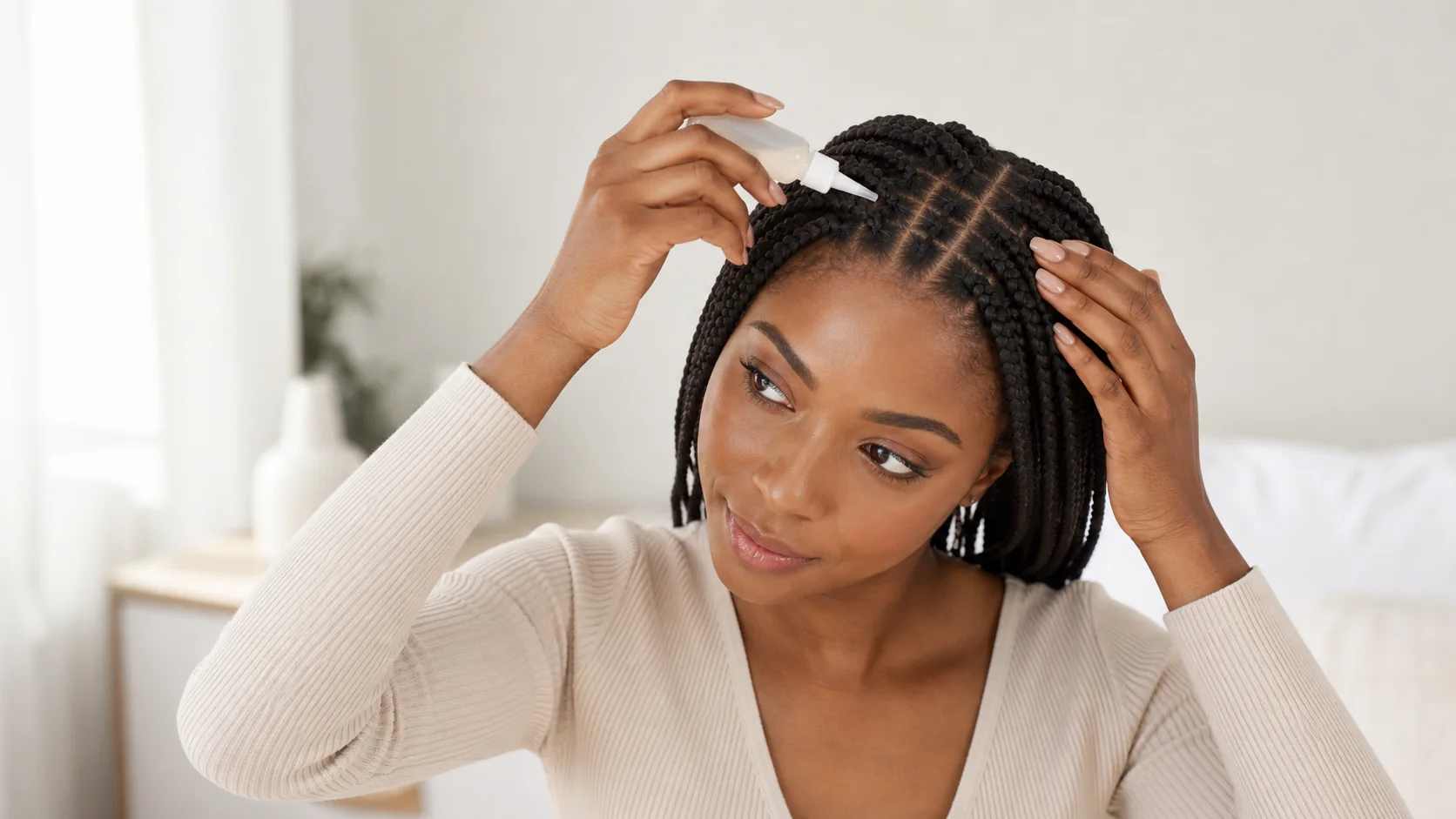
Learning how to prevent a dry scalp under protective styles starts with knowing what your scalp is telling you. Tightness, white flakes, oily scale, burning, and product residue can look similar from a distance, but they do not have the same cause. Adding oil to every uncomfortable scalp may hide flakes temporarily while making buildup or dandruff worse.
A good protective-style routine begins before the installation, keeps the scalp clean and accessible while the style is worn, and uses the lightest product that restores comfort. This guide covers braids, twists, cornrows, crochet styles, sew-ins, and wigs, plus the warning signs that mean a style needs to come out.
First, Is It Dryness, Buildup, Irritation, or Tension?
Before applying anything, inspect the exposed parts under bright light. If possible, use a mirror or phone camera to check areas you cannot see easily.
- Simple dryness: The scalp feels tight and looks slightly ashy, with small loose flakes and little redness.
- Product buildup: Residue feels sticky, waxy, or greasy and collects around braid bases or parts.
- Dandruff or seborrheic dermatitis: Flakes may be oily, yellowish, or persistent, often with itching and inflamed skin.
- Contact irritation: Burning, intense itching, redness, or bumps can follow exposure to synthetic hair, fragrance, gels, adhesives, or sprays.
- Excessive tension: Pain, shiny stretched skin, headache, tenderness, tiny bumps, or pulling at the edges suggests the style is too tight.
Oil can seal in moisture, but it does not add water to the skin and it does not cleanse residue. If the scalp is inflamed, painful, or increasingly flaky, stop layering products and address the cause.
Prepare Your Scalp Before the Style
Prevention is easier when the scalp starts clean, calm, and free of heavy residue. Wash with a shampoo that suits your scalp, then rinse thoroughly. If you use many butters, gels, silicones, or edge products, a clarifying wash may help remove the film before installation. Follow with conditioner on the hair lengths rather than coating the scalp.
Detangle carefully before braiding. Rushing through knots can create breakage that is blamed on the protective style later. If your strands are delicate, use this guide to detangle fine hair without breakage.
Allow the scalp and hair to dry fully before the style is installed. Braiding very damp hair can trap moisture for too long, particularly under wigs, dense extensions, or sew-ins.
Discuss Tension Before Installation
Tell the stylist that scalp comfort matters more than an ultra-tight finish. Medium or larger sections and lighter extensions may reduce the load on each group of hairs. Ask for less tension around the hairline, nape, and temples. A protective style should feel secure, but it should not require several painful days to loosen.
If you cannot blink comfortably, sleep, move your eyebrows, or turn your head without pulling, the installation is too tight. Loosen or remove the responsible sections promptly. Pain is not proof that the style will last longer.
Choose Products That Will Not Smother the Scalp
The most useful product depends on what is missing:
- For mild tightness or dryness: Choose a fragrance-free, water-based scalp mist or light leave-on scalp serum.
- To slow moisture loss: Apply a few drops of a lightweight oil after a water-based product, only if your scalp tolerates oil.
- For hold on the hair: Keep mousse and gel mainly on the braids or twists instead of repeatedly coating the scalp.
- For a diagnosed scalp condition: Follow the treatment plan from a dermatologist. Do not replace medicated care with cosmetic oil.
A fine-tip nozzle helps place product along exposed parts instead of soaking the whole style. Start with less than you think you need. A scalp that feels comfortable after a few drops does not benefit from a thick layer.
Ingredients and Formulas to Approach Carefully
Fragrance, essential oils, alcohol-heavy sprays, strong cooling ingredients, and concentrated botanical extracts can irritate sensitive skin. Natural does not automatically mean gentle. Patch-test unfamiliar products before installation when possible, and avoid mixing several new products at once. If a reaction occurs, you will have a better chance of identifying the trigger.
A Practical Weekly Scalp Routine
Daily: Observe, Do Not Automatically Oil
Spend a few seconds checking for tightness, flakes, odor, tenderness, and residue. After exercise, blot sweat from accessible parts with a clean soft cloth. Let braids, the hair underneath, and the scalp dry completely before putting on a wig, bonnet, scarf, or hat.
If the scalp feels normal, leave it alone. Daily manipulation and repeated oiling can create the very buildup that makes the scalp itch.
Two or Three Times a Week: Add Light Moisture If Needed
Apply a small amount of water-based scalp mist along the parts. Keep the nozzle close enough to target the skin but do not scratch it with the tip. Press gently with clean fingertips. Avoid using your nails, which can create tiny injuries.
If your scalp becomes dry again within hours, do not simply double the oil. Review the formula, indoor humidity, wash schedule, tension, and whether the flakes could be a scalp condition instead.
As Needed: Clean the Scalp
Protective styling does not cancel wash day. How often you cleanse depends on your scalp, activity, products, and style. A person who sweats frequently or develops oily buildup may need more frequent cleansing than someone with a calm, low-oil scalp.
- Dilute shampoo in an applicator bottle only at the time of use, not for long-term storage.
- Apply it directly to exposed parts and beneath accessible sections.
- Massage with finger pads using small gentle movements.
- Rinse thoroughly while directing water along the braid pattern.
- Squeeze the lengths gently with a microfiber towel. Do not rub.
- Dry the scalp, natural hair, and extensions completely. Use a hooded dryer or cool to low diffuser if dense areas remain damp.
If your roots become oily quickly, the principles in this oily hair care guide can help you cleanse without piling on drying products.
How to Care for Different Protective Styles
Box Braids and Knotless Braids
Use the visible grid of parts to apply mist and shampoo precisely. Avoid pulling the braids into a tight high bun every day, since this adds tension to the same roots. Alternate loose positions and protect the hairline at night.
Cornrows and Crochet Styles
Follow the direction of the cornrows when cleansing and rinsing. A narrow applicator tip can reach between rows. Because the natural hair is close to the scalp, make complete drying a priority.
Sew-Ins
Reach the scalp through the tracks without flooding the base. Divide cleansing into small sections, rinse longer than you think necessary, and use directed airflow to dry the braided foundation. Persistent dampness, odor, or residue is a reason to have the installation checked or removed.
Wigs
Remove the wig regularly when the design allows it, clean the wig cap, and let your scalp air out. Adhesives and edge products can trigger irritation or residue at the hairline. Do not keep wearing a cap that is sweaty or damp.
Twists and Natural-Hair Updos
These styles may offer easier scalp access, but tight pins and bands can still cause pressure. Move accessories and anchor points rather than stressing the same area every day.
Night Care and Environmental Protection
Wrap braids or twists in a clean satin or silk scarf, or use a roomy bonnet that does not pull the hairline. Wash the scarf, bonnet, and pillowcase regularly because they collect oil, sweat, and product.
In dry weather, a room humidifier may improve comfort, but it should be cleaned according to its instructions. In hot or humid weather, focus more on sweat removal and complete drying. Healthy habits around manipulation, cleansing, and sleep protection also support the broader golden rules of hair care.
Common Mistakes That Make Dryness Worse
- Applying oil to a dirty scalp: This can trap residue and make it harder to see the real cause of flakes.
- Scratching with nails or tools: Scratches increase irritation and infection risk.
- Using heavy butter between every part: Thick layers may collect lint and complicate cleansing.
- Ignoring tightness: Moisturizer cannot correct mechanical pulling.
- Skipping washes to preserve neatness: A style that only looks fresh when the scalp is neglected is not functioning protectively.
- Sleeping with a damp foundation: Dense braids and sew-ins may remain wet long after the surface feels dry.
- Keeping the style beyond its comfortable life: New growth, matting, residue, and tension usually increase with time.
When to Remove the Style
Remove or loosen a style if you have ongoing pain, shiny stretched skin, tension bumps, broken hairs at the root, sores, pus, worsening redness, or a strong reaction to the extension hair or adhesive. Also reconsider the style if you cannot clean and dry the scalp properly.
Seek medical care for persistent scaling, burning, severe itching, spreading redness, hair loss, or symptoms that continue after the style is removed. Conditions such as seborrheic dermatitis, psoriasis, eczema, contact dermatitis, and infection need different treatments. A dermatologist can identify which one is present.
Frequently Asked Questions
Should I oil my scalp every day with braids?
Not automatically. Apply product based on symptoms, not the calendar. Many scalps do better with occasional light, water-based moisture and regular cleansing than with daily oil layers.
Can I wash my scalp while wearing a protective style?
Yes, if the style allows safe access and thorough drying. Apply shampoo to the scalp, massage gently, rinse fully, and dry the foundation as well as the visible extensions.
Why does my scalp itch immediately after getting braids?
Possible causes include excessive tension, irritating installation products, sensitivity to synthetic hair, or a preexisting scalp problem. Pain, burning, bumps, and redness should not be treated as normal adjustment.
Does oil moisturize a dry scalp?
Oil can reduce moisture loss, but it does not supply water. For simple dryness, use a compatible water-based scalp product first and add only a small amount of oil if needed.
How long should I keep a protective style?
There is no single safe duration for everyone. The correct time depends on the style, scalp condition, new growth, matting, tension, and your ability to cleanse and dry the hair. Comfort and scalp health should decide, not an arbitrary deadline.
The Bottom Line
To prevent a dry scalp under protective styles, begin with a clean and calm scalp, avoid excessive installation tension, add light water-based moisture only when needed, cleanse before residue accumulates, and dry every hidden layer completely. Most importantly, distinguish ordinary dryness from buildup, irritation, dandruff, and tension. A style is only protective when the scalp beneath it remains healthy and accessible.