
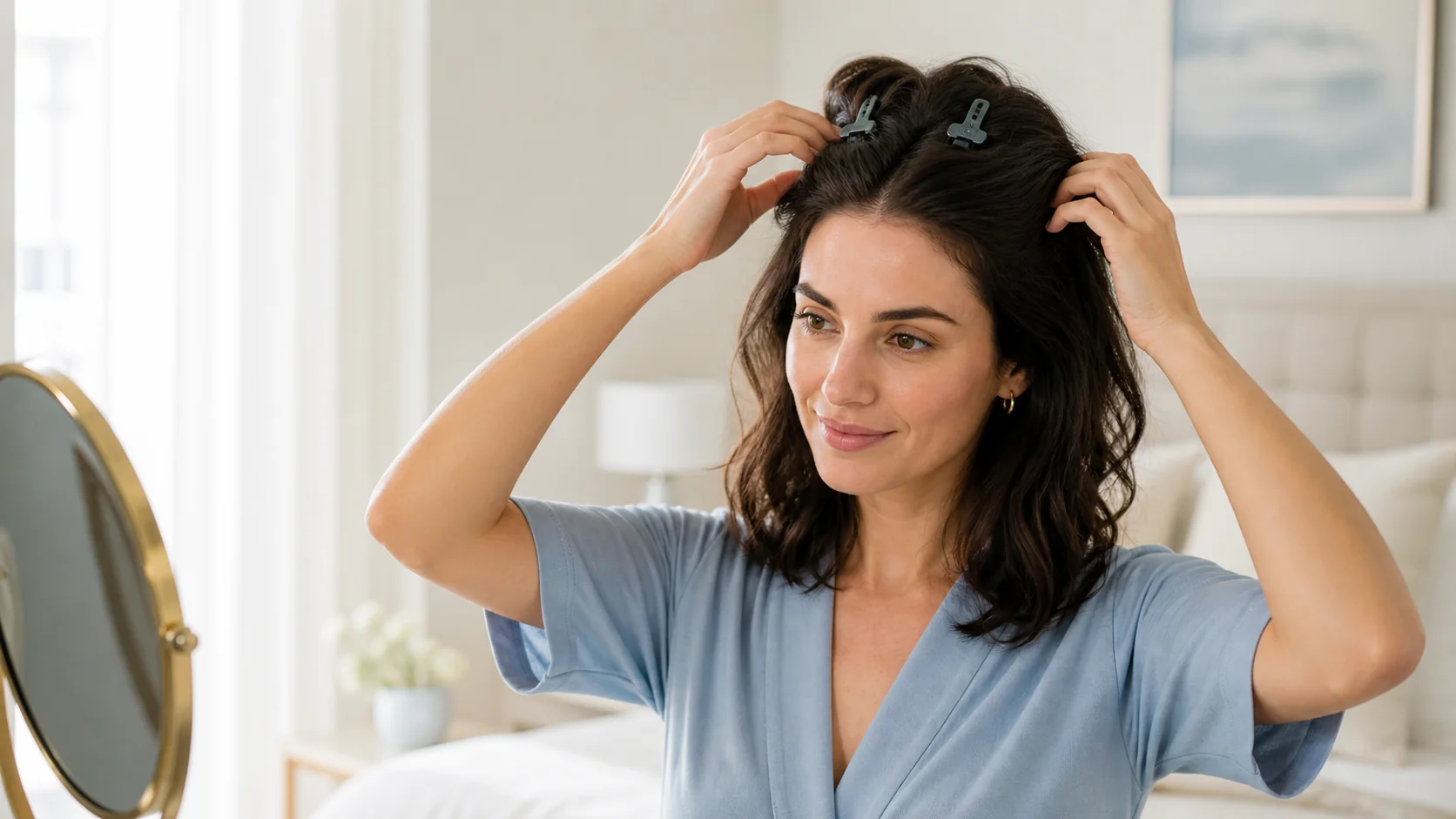
Learning how to revive flattened roots without rewashing hair is easier when you identify why the roots collapsed. Hair pressed flat by sleep needs a different fix from oily roots, humid roots, product buildup, or a style that was heavy from the beginning. The right approach may be as simple as changing your part, or it may require targeted moisture, controlled airflow, root clips, or a small amount of oil-absorbing product.
This guide starts with product-free methods, then adds styling options only where they help. It includes straight, wavy, curly, coily, fine, dense, and heat-styled hair.
Why Roots Go Flat Between Washes
Root volume depends on the angle at which hair leaves the scalp, the weight of the lengths, natural oil, humidity, and styling residue. Overnight pressure can train hair to lie in one direction. Sebum can group fine strands together. Water or sweat can reset the roots close to the head. Rich creams and repeated dry shampoo can add weight. Long or dense hair can also pull itself downward even when it is clean.
Flat roots are not always dirty roots. Before applying anything, touch and inspect the crown, temples, part, and nape.
Diagnose the Cause in 30 Seconds
- Clean but compressed: Hair feels normal and looks flat mainly where it touched the pillow, hat, or headrest.
- Oily: Roots look shiny, separate into narrow sections, or feel slick.
- Damp from sweat or humidity: Roots feel cool or slightly moist and may have dried in the wrong direction.
- Product-heavy: Hair feels coated, powdery, sticky, stiff, or dull.
- Flat from wash day: The style never developed lift, often because of heavy conditioner, root product, drying direction, or the weight of the haircut.
If the scalp is itchy, sore, flaky, or has odor, volume tricks are not the priority. Wash when you can and address the scalp rather than applying another layer.
Start With the Product-Free Root Reset
1. Let the Hair Settle
Remove your bonnet, scarf, clips, or hair tie and wait five minutes. Hair that was compressed overnight may rebound after it is released. Trying to style it immediately can make you add more product than necessary.
2. Break Up the Part
Move your part slightly to the opposite side or create a soft zigzag instead of a sharp line. Hair that has dried in one direction usually lifts when redirected. You can return to your usual part after ten minutes, once the roots have cooled or set in the new position.
3. Lift With Clean Fingertips
Slide dry fingertips beneath the hair at the scalp and move them in small side-to-side motions. Lift the roots without raking through the lengths. For curls and coils, keep your fingers below the curl clumps so you do not create surface frizz.
4. Use Cool Air
Tilt your head to one side or forward and direct a dryer on cool or low heat at the roots for 20 to 60 seconds per area. Aim against the direction in which the hair is lying. Keep airflow gentle and moving. Let the roots cool in the lifted position before flipping back.
This brief reset is often enough for compression and mild humidity. It also avoids coating the scalp.
Use Root Clips for Hands-Free Lift
Root clipping works well for straight, wavy, and curly hair. Lift a section at the crown and place a small clip so the roots stand away from the scalp. Use two clips in opposite directions for a centered part, or several clips along flat areas.
For dry roots, leave the clips in for ten to twenty minutes while you get ready. A brief cool or low-heat blast can help set the lift. For slightly damp roots, use clips only after blotting sweat and make sure the scalp dries completely.
Choose smooth clips without sharp edges. Do not clamp them tightly enough to bend or pull fragile strands.
When a Small Amount of Water Helps
Water is useful when roots have dried in the wrong direction, especially on wavy, curly, and coily hair. It is less useful when oil or buildup is the main cause.
- Mist water into your hands instead of spraying the whole head.
- Press damp fingertips only into the flattened root area.
- Lift or gently scrunch the roots into their natural pattern.
- Add root clips if needed.
- Diffuse on low airflow or let the area dry untouched.
Do not saturate the lengths. Too much water increases drying time and may flatten the roots again under the weight of wet hair.
How to Handle Oily, Flat Roots
If oil is causing the collapse, begin by blotting the part and hairline with clean tissue or blotting paper. Then decide whether a small amount of dry shampoo is appropriate.
Apply dry shampoo only to dry hair. Hold an aerosol at the distance given on its label, target oily areas rather than the entire scalp, and let it sit before massaging or brushing it through. Powder formulas should be applied sparingly. Adding more immediately can leave hair chalky and heavy.
Dry shampoo absorbs oil but does not clean the scalp. Wash with shampoo and water after one or two uses rather than repeatedly covering residue. If oiliness is a regular concern, use this fuller guide on how to care for oily hair.
Choose the Right Styling Product
Volumizing Mousse or Foam
A small amount of lightweight foam can help roots that need structure. Dispense a little into your palm, tap it onto selected root sections, and dry while lifting. This is often a better match for fine or wavy hair than a rich cream.
Texture or Volume Spray
Use a light mist under sections, not a cloud over the whole head. Lift and shake the roots after the product settles. Stop if the scalp feels gritty, itchy, or coated.
Root Powder
Root powder can create grip for very slippery hair, but it is easy to overuse. Apply to a few hidden sections and build slowly. Avoid aggressive backcombing, which can cause tangles and breakage.
What to Avoid at the Roots
Heavy oils, butters, rich leave-ins, and smoothing creams usually reduce volume when applied at the scalp. Keep them on dry lengths or ends if needed.
Techniques by Hair Type
Fine or Low-Density Hair
Start without product. Change the part, lift with cool air, and use root clips. If oil is present, apply dry shampoo only to the most visible areas. Fine strands can collapse under multiple products, so choose one helper rather than stacking powder, spray, and mousse.
Be gentle when separating flat sections. If knots appear, use the same careful method recommended for detangling fine hair without breakage.
Straight Hair
Redirect the roots with a part flip and brief airflow. For a smoother finish, lift a section with a round brush and apply low heat at the root only, then use cool air before releasing. Keep the brush moving and avoid pulling tightly.
Wavy Hair
Use damp fingertips at the root, scrunch lightly, and clip the crown while it dries. Avoid brushing through dry waves. If the lengths look good, leave them untouched and concentrate only on the top two inches.
Curly and Coily Hair
Insert fingertips or a wide hair pick at the roots and lift slightly without dragging through the curl pattern. Stop before the tool reaches the mid-lengths. For compressed curls, use a little water at the base and diffuse with your head tilted. Avoid heavy cream unless the hair is genuinely dry.
Surface frizz and root volume are different issues. If smoothing the hair after washing keeps making it fuzzy, review these causes of frizzy hair after a shower.
Dense or Long Hair
Work in horizontal sections so airflow reaches the roots beneath the top layer. Use several root clips instead of one large clip. Long hair may need a haircut with strategic layers if its weight consistently defeats every temporary lift technique.
Blowouts and Heat-Styled Hair
Keep water away unless you are willing to reset the texture. Use a part change, dry shampoo for true oil, large rollers at the crown, or a round-brush root lift. Always let heated roots cool in the raised position before removing the tool.
Five-Minute Root Revival Routine
- Release the hair and wait one minute.
- Check whether the roots feel clean, oily, damp, or coated.
- Change the part and loosen compressed areas with fingertips.
- Clip the crown upward.
- Use cool or low airflow for one to two minutes.
- Add one targeted product only if the cause requires it.
- Let the roots cool, remove clips, and arrange without overhandling.
Common Mistakes
- Spraying the entire head with water: This can add weight and disturb a style that only needed root correction.
- Using dry shampoo on damp hair: It can clump and distribute unevenly.
- Adding heavy oil for shine: Oil may separate strands and flatten fine roots.
- Backcombing aggressively: Teasing creates tangles and can damage the cuticle.
- Stacking several texture products: Temporary lift can become tomorrow’s buildup.
- Using high heat close to the scalp: Gentle, controlled airflow is usually enough.
- Ignoring itch or residue: A scalp that needs cleansing will not benefit from another styling layer.
Make Root Volume Last Longer
On wash day, keep rich conditioner and leave-in away from the root area unless your scalp or hair specifically needs them. Rinse thoroughly, style with lighter products near the crown, and dry roots in more than one direction. Let the hair cool before touching it.
At night, avoid a tight bun or ponytail that pulls the crown flat. Use a satin or silk pillowcase, and place long hair loosely above the head. Change the exact placement of clips and ties so the same area is not compressed every night.
Balanced cleansing, gentle handling, and sensible product use also support the golden rules of healthy hair care.
When Rewashing Is the Better Choice
Wash when the scalp feels oily throughout, smells, itches, burns, or carries several layers of dry shampoo and styling residue. Rewashing is also reasonable when sweat has soaked the roots or the style cannot be refreshed without adding more and more product.
Persistent sudden flattening with scalp symptoms or increased shedding deserves professional assessment. Styling tricks should not hide discomfort or inflammation.
Frequently Asked Questions
Can I revive roots without using any product?
Yes. A part change, fingertip lift, root clips, and cool airflow often restore roots that were compressed by sleep or a hat.
Should I wet flat roots?
Use a little water when the roots dried in the wrong direction or curls need reactivation. Skip water when oil or buildup is the main issue.
Does dry shampoo add volume?
It can absorb oil and add grip, but it does not wash the scalp. Apply it sparingly to dry roots and cleanse after one or two uses.
How do I lift curly roots without making frizz?
Work underneath the curl clumps with fingertips or a wide pick, lifting only at the root. Use gentle airflow and avoid pulling the tool into the lengths.
Why do my roots go flat immediately after washing?
Possible causes include heavy products near the scalp, incomplete rinsing, drying in one direction, long heavy lengths, or a naturally low-volume growth pattern. Adjust wash-day technique before adding more refresh products.
The Bottom Line
The best way to revive flattened roots without rewashing is to match the method to the cause. Redirect and cool compressed roots, use limited water for a pattern reset, absorb oil only where needed, and avoid adding weight to product-heavy hair. Start with your hands, clips, and airflow. Add one lightweight product only when it solves a specific problem, and choose a real wash when the scalp needs cleaning.