
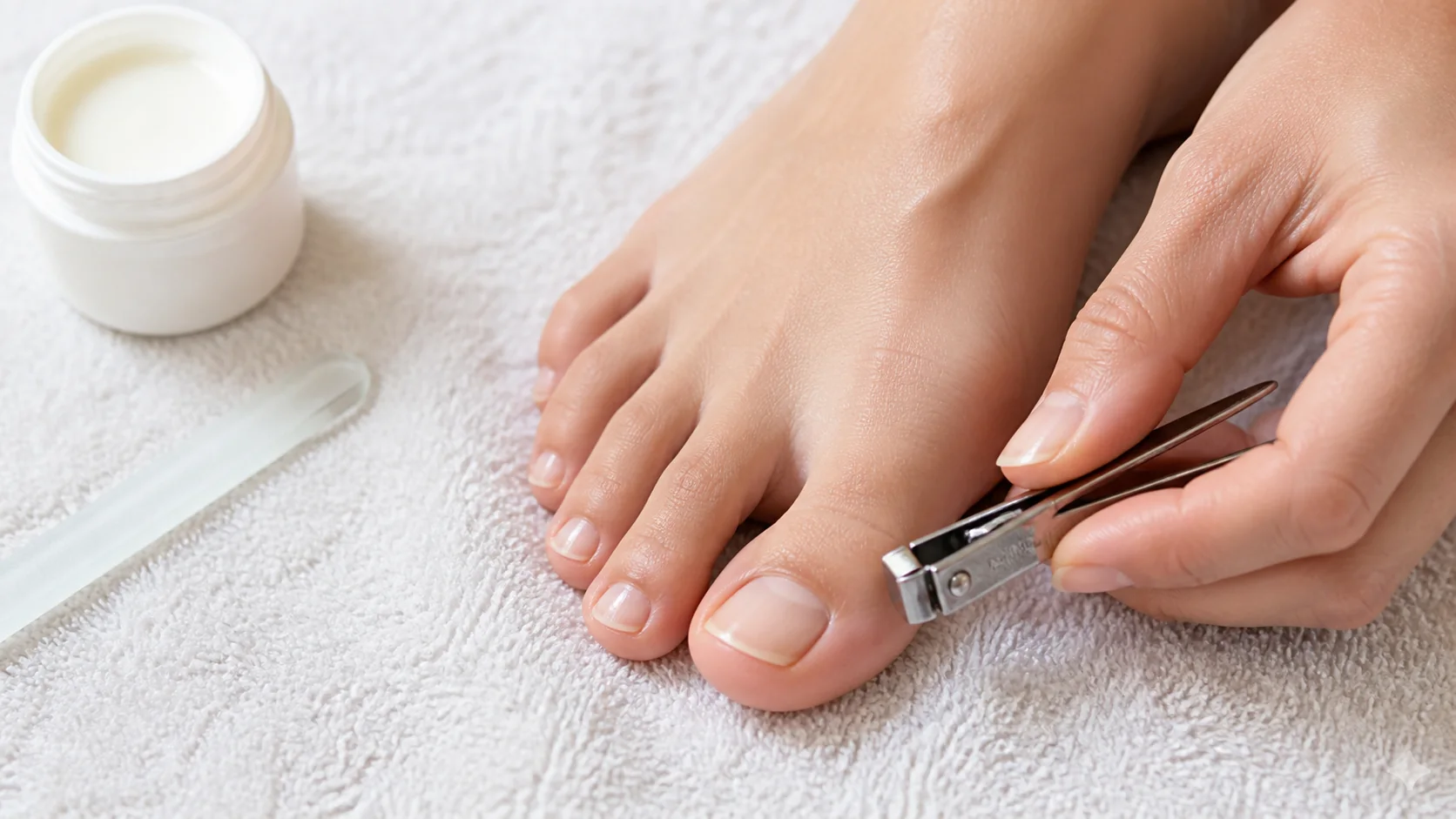
A split at the corner of a toenail often begins with a small rough edge, repeated shoe pressure, or a trimming habit that leaves the side weak. Once that corner catches on a sock, the crack can travel farther into the nail and become painful.
Learning how to prevent toenails from splitting at the corners means keeping the edge smooth without cutting deeply down the sides, reducing pressure inside shoes, and paying attention to changes in thickness, color, and attachment. Toenails grow slowly, so consistent prevention matters more than an occasional repair.
Why Toenail Corners Split
The corners carry pressure from both the free edge and the skin along the nail groove. Common causes include:
- Cutting the sides into a rounded or V shape
- Leaving a sharp spike after clipping
- Trying to remove the whole nail width in one large clip
- Wearing shoes that squeeze the toes together
- Repeated impact during running, hiking, or sport
- Picking, peeling, or tearing an uneven corner
- Dryness and repeated wet-to-dry cycles
- A thickened, brittle, separated, or infected nail
A single split after an obvious snag is different from a corner that breaks repeatedly without clear trauma. Recurrent changes deserve closer attention.
Trim Toenails Straight Across
Dermatologists and foot-care services generally recommend trimming toenails straight across. This leaves the corners visible and allows them to grow forward instead of burying a short sharp edge beside the skin.
Straight across does not mean leaving a jagged line. After clipping, use a fine nail file to smooth roughness at the free edge. Do not round the corners deeply into the nail grooves.
Leave a small free edge
Do not cut toenails flush with the skin. A small visible edge helps protect the end of the toe and reduces the temptation to chase the corners lower. The correct length varies with toe shape, but the nail should not extend so far that it hits the shoe.
Use Gradual Clips Instead of One Hard Cut
Toenails are thicker than fingernails. Forcing a clipper through the entire nail in one motion can bend the plate and send pressure toward a corner.
- Use a clean, sharp toenail clipper that fits the nail.
- Begin at one side of the free edge without cutting down the groove.
- Make several small cuts across the nail.
- Stop before the opposite corner is pulled or twisted.
- File the edge gently in one direction to remove snags.
Replace clippers that crush, tear, or leave a ragged edge. Clean and dry tools according to appropriate hygiene guidance, and do not share them.
Choose the Right Time to Trim
Toenails are often easier to clip after a bath or shower because they are slightly softer. Dry the feet first so the tool does not slip. If your nails become very flexible when wet, wait briefly and use gradual cuts.
Filing is often most predictable when the nail is dry. Use a fine file and light pressure. Stop if the edge begins to fray into layers.
File the Corner Without Digging Down the Side
A rough corner can be smoothed from the visible free edge. Hold the file perpendicular to the nail and move it in one direction. The goal is to remove a snag, not to carve away the sidewall.
Do not insert the file into the nail groove or under attached nail. Avoid sawing back and forth, which can add stress to a brittle edge. If a sharp piece is hidden below swollen skin, let a podiatrist assess it rather than trying to reach it yourself.
Wear Shoes With Enough Toe Room
A narrow or shallow toe box presses the nail corners against adjacent toes and the shoe. Repeated pressure can encourage cracks, bruising, and ingrown edges.
Check footwear while standing, when the foot is bearing weight. Toes should move without rubbing the front or sides. The upper should have enough depth that it does not press down on the nails.
For running, hiking, and long walks, account for foot movement and swelling. Secure the heel so the foot does not slide forward with every step. Replace shoes that have become compressed or misshapen.
Keep Feet Dry, but Moisturize the Nail Area
Wash feet daily and dry them carefully, especially between the toes. Change damp socks and let shoes dry between wears. Constant moisture can soften the nail and skin and may support infection.
At the same time, an overly dry nail can split more easily. Massage a small amount of moisturizer into the nail plate and surrounding skin after washing, while avoiding heavy cream between the toes. Use a product appropriate for your skin and stop if irritation occurs.
Do not assume a cosmetic oil can treat a fungal infection or repair a crack that extends into living tissue.
Protect Toenails During Sport and Work
Repeated impact can weaken the same corner even when shoes fit reasonably well. Keep nails at a practical length, wear activity-appropriate footwear, and use clean socks that manage moisture.
If one toe hits the shoe during downhill walking or running, review shoe length, lacing, and foot movement. A podiatrist or footwear professional can help assess repeated trauma.
Wear protective footwear when heavy objects could fall on the toes. A cracked nail after a significant injury may need medical assessment, especially when blood collects beneath it or the nail becomes loose.
What to Do When a Corner Starts to Split
Do not tear the piece away. Wash and dry the toe, then check whether the split is limited to the white free edge.
If it is painless and fully within the detached edge, use a clean clipper to remove only the loose snag and smooth the remaining edge with a fine file. Do not cut farther down the side to make both corners match.
If the crack reaches attached pink nail, bleeds, hurts, or sits beside inflamed skin, stop trimming. Protect it from catching with a clean dressing if needed and seek advice from a podiatrist or clinician.
Do Not Patch a Suspicious Toenail
Cosmetic glue, gel, acrylic, or a fabric patch can hide moisture, discoloration, or infection. Avoid sealing a split that is painful, thickened, yellow, green, brown, crumbly, lifting, or producing an odor.
A temporary cosmetic repair that may be reasonable for a healthy fingernail is not automatically appropriate for a repeatedly splitting toenail. Feet spend hours inside shoes, where pressure and moisture change the risk.
Split Corner or Ingrown Toenail?
A split corner is a crack or missing piece in the nail plate. An ingrown toenail occurs when the nail edge presses or grows into adjacent skin. The two problems can occur together if a deeply cut corner leaves a sharp spike.
Signs of an ingrown nail include tenderness along the side, redness, swelling, and pain from shoe pressure. Drainage or increasing warmth may indicate infection. Do not dig out the corner, cut a V into the center, or place sharp tools beneath the nail.
For more practical trimming and pedicure routines, explore the Glow Finds Daily nail guides.
When Repeated Splitting Needs Evaluation
See a clinician or podiatrist when the same corner repeatedly cracks, the nail becomes thick or distorted, or several toenails change together. Possible contributors include ongoing trauma, fungal infection, psoriasis, circulation problems, and other nail disorders.
Seek prompt advice for pain, swelling, pus, spreading redness, a loose nail, a dark streak, or discoloration that does not grow out. People with diabetes, poor circulation, reduced sensation, or immune conditions should not self-treat painful or damaged toenails without professional guidance.
Common Mistakes That Weaken the Corners
- Cutting a deep curve down both sides
- Clipping the nail extremely short
- Pulling off a partially attached corner
- Forcing one large cut through a thick nail
- Sawing aggressively with a coarse file
- Wearing pointed or shallow shoes for long periods
- Ignoring repeated impact during exercise
- Covering discoloration with polish or glue
- Trying to thin a thick nail with a sharp household tool
A Simple Monthly Prevention Routine
- Inspect each toenail in good light for roughness, color changes, lifting, and skin irritation.
- Trim only when enough free edge has grown, using several gradual clips straight across.
- File visible snags lightly in one direction.
- Clean and dry the tools before storage.
- Apply moisturizer to the nail and surrounding skin.
- Check the fit and condition of frequently worn shoes.
Toenails grow slowly, so trimming schedules vary. Do not cut a corner again simply because a calendar date arrives.
Frequently Asked Questions
Should toenail corners be rounded?
Keep the overall trim straight across. You may lightly smooth a sharp visible snag, but do not round deeply down the sides or remove the corners from the nail grooves.
Can cuticle oil prevent toenail splits?
Moisturizing may help a dry nail stay more flexible, but it cannot correct shoe trauma, a poor trim, infection, or a structural nail disorder. Use it as supportive care, not as a cure.
Why does only my little toenail split?
The little toe often experiences pressure from the shoe sidewall. Check toe-box width, nail shape, and repeated friction. Persistent thickening or distortion should be assessed professionally.
Can I glue a split toenail corner?
Avoid glue when the split is painful, reaches attached nail, or shows discoloration or lifting. Glue can hide the area and irritate skin. A podiatrist can advise on a safe repair when appropriate.
How short should toenails be?
Leave a small free edge rather than cutting flush with the skin. The nail should also be short enough that it does not repeatedly hit the shoe. Individual anatomy varies, so seek podiatry advice if ordinary trimming causes pain.
The Bottom Line
To prevent toenails from splitting at the corners, trim straight across with several small clips, leave the corners visible, smooth snags gently in one direction, and avoid cutting too short. Combine that technique with roomy shoes, moisture control, careful moisturizing, and protection from impact. Recurrent, painful, discolored, thickened, or lifting nails need professional assessment rather than deeper trimming or a cosmetic patch.