
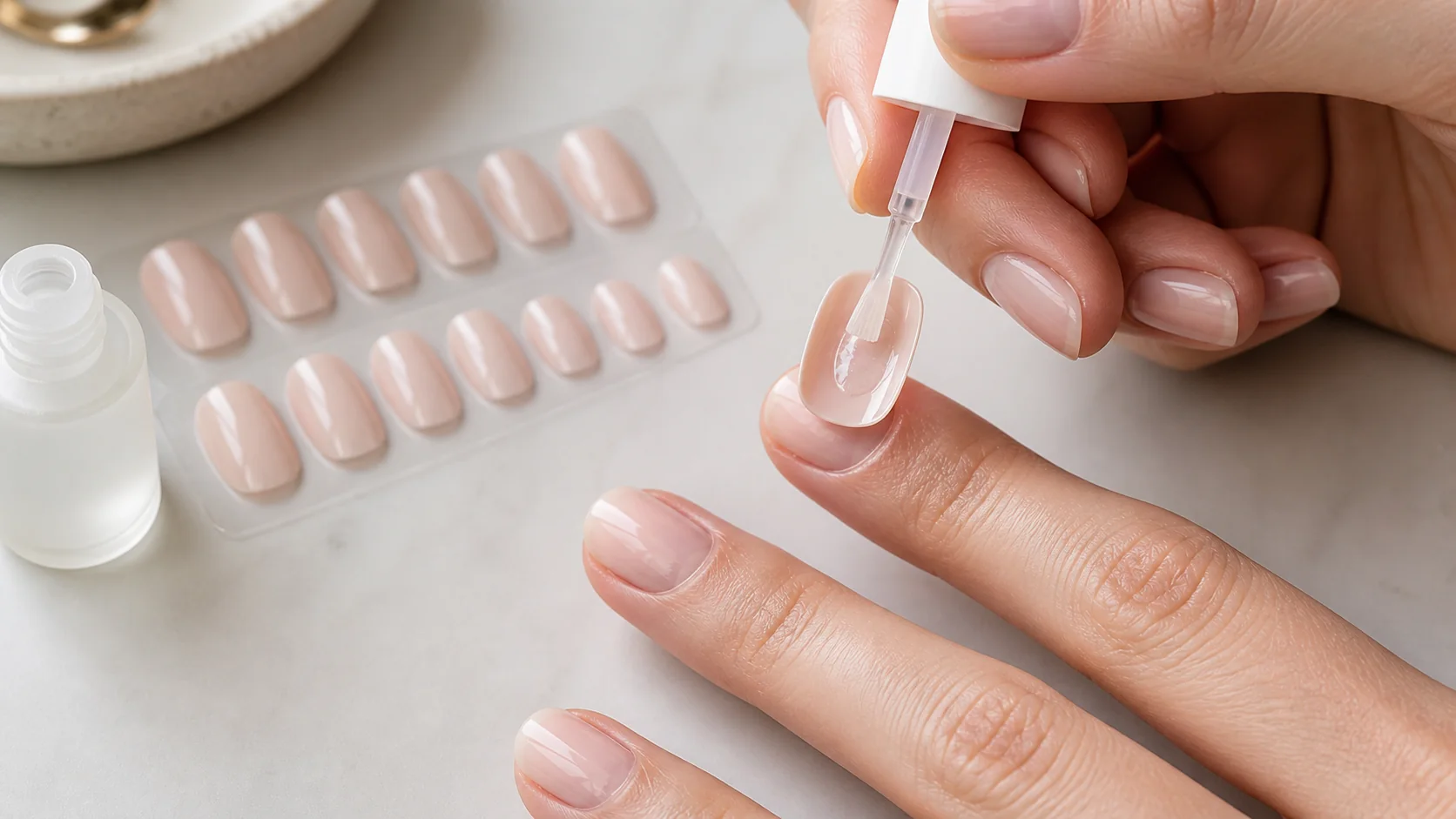
Press-on nails are easiest to apply when the tip fits properly and the adhesive stays in a controlled layer. Too much glue, a press-on that overlaps the skin, or sudden downward pressure can force liquid out around the edges.
Learning how to prevent nail glue from touching the skin starts before you open the bottle. Size every press-on, arrange the set in order, protect the work area, and choose an applicator that lets you use a very small amount. Then apply one nail at a time with slow, even pressure.
Why Skin Contact Matters
Many press-on nail glues contain cyanoacrylate, a fast-setting adhesive that bonds quickly in the presence of moisture. Skin contact can glue fingers together, irritate the area, or create pain if bonded skin is pulled apart. Some people can also develop an allergic reaction to nail products.
A large spill can produce heat as the adhesive cures. Cyanoacrylate can react especially quickly with cotton or wool and may become hot enough to cause a burn. Never use a cotton pad, cotton swab, cotton clothing, or wool fabric to catch or wipe a fresh nail-glue spill unless the product manufacturer specifically confirms that it is safe.
Choose the Right Adhesive
Use glue labeled for artificial nails and follow its directions. Do not substitute household super glue. Nail glue packaging and applicators are designed for cosmetic use, although the adhesive still requires careful handling.
Brush-on glue often gives beginners more control than a runny squeeze tube. A brush can spread a thin film without using the bottle tip as a scraper. If you prefer a tube, choose one with a narrow precision nozzle and never enlarge the opening.
Adhesive tabs are another option for short-term wear. They usually provide less hold than liquid glue, but they avoid handling a fast-setting liquid. Use the attachment method recommended for your press-on set.
Prepare the Space Before Opening the Glue
- Work on a smooth, stable, nonfabric surface.
- Keep cotton, wool, tissues with unknown fibers, and loose clothing away.
- Provide good lighting and ventilation.
- Keep the glue upright in a stable holder when possible.
- Read the label’s first-aid directions before application.
- Keep the product away from children, pets, eyes, and mouth.
- Have warm soapy water and the product packaging accessible in case of accidental bonding.
Do not apply press-ons while sitting on a bed, sofa, carpet, or towel. A dropped bottle can soak into fabric, spread the adhesive, and generate heat.
Size Every Press-On Before You Apply Glue
Test all ten press-ons while the glue is closed. Each tip should cover the natural nail from side to side without pressing into the sidewalls or resting on the cuticle skin. If it sits on skin, it is too wide or needs careful shaping.
If you are between sizes, choose the tip that can be filed to fit. Shape only the press-on, not the skin. Recheck the curve and width after filing. A tip that rocks, pinches, or leaves a large gap will require excess pressure or extra glue and is more likely to leak.
Arrange the finished sizes in order from thumb to pinkie before moving to preparation.
Prepare the Natural Nail Gently
Wash and fully dry your hands. Gently move back the nail folds if needed and remove only loose, nonliving cuticle residue from the nail plate. Do not cut the living skin or apply glue over broken, inflamed, or infected areas.
Follow the press-on manufacturer’s directions for cleaning the nail plate. Many kits include an alcohol prep pad. Avoid hand cream and cuticle oil immediately before application because they can reduce adhesion and make tools slippery.
Use Less Glue Than the Maximum Space Allows
More glue does not always create a better manicure. The press-on pushes adhesive outward, so a layer that reaches every edge before placement has nowhere to go except onto the skin.
Apply a thin, even coat according to the glue label. Leave a narrow dry margin around the side and cuticle edges. The amount needed depends on nail size, curvature, adhesive viscosity, and product directions. Start conservatively rather than adding a large drop.
If the brand directs you to apply glue to both the natural nail and the press-on, keep both layers thin. Do not improvise a double-application method when the instructions call for glue on only one surface.
Place the Press-On at a Controlled Angle
- Hold the press-on by its free edge without touching the glued area.
- Position its base slightly away from the living cuticle skin.
- Lower it toward the natural nail at roughly a 45-degree angle.
- Let the contact move gradually from the base toward the tip.
- Apply even pressure at the center, then the sides, without squeezing hard enough to force glue out.
- Hold it for the time stated on the adhesive label.
Do not slide the tip back and forth after contact. Cyanoacrylate begins bonding quickly, and repositioning can spread adhesive toward the skin or create uneven gaps.
Apply One Nail at a Time
Trying to coat several nails before placement gives runny adhesive time to travel. Complete the glue, alignment, placement, and hold for one finger before opening the next press-on.
Leave the thumbs until last if they help you position other nails. Keep the glue bottle upright and close it whenever you pause. Never clear a blocked nozzle with your teeth, a pin held toward your face, or forceful squeezing.
What to Do if Glue Reaches the Skin
Stay calm and do not pull bonded skin apart. Pulling can tear the skin. Follow the product label and contact your local poison center or medical service for advice if you are unsure.
For a small amount on intact skin, warm soapy water may help soften the bond. Oil or petroleum jelly can also be massaged around the edge to help it release gradually. Some guidance includes acetone, but acetone can irritate skin and should not be used near eyes, mouth, broken skin, or sensitive areas. Never force separation.
Do not wipe fresh cyanoacrylate with cotton or wool. If glue spills onto cotton or wool clothing and becomes hot, move away from the source, cool the affected area with water, and seek urgent advice from emergency services or a poison center. Do not peel hot bonded fabric from the skin.
Glue in the eye or mouth
Do not force an eyelid or bonded tissue open. Rinse an exposed eye with water and contact emergency medical services or a poison center immediately. If glue enters the mouth, seek poison-control guidance. Do not use acetone in either area.
Signs of a burn or allergic reaction
Get medical help for severe pain, heat, blistering, spreading redness, facial swelling, trouble breathing, or a widespread rash. Stop using the product if repeated applications cause itching, swelling, cracking, or redness around the nails.
Do Not Cure Ordinary Nail Glue Under a Lamp
Traditional press-on nail glue is generally air-setting and does not require a UV or LED lamp. Gel adhesive systems are different products with separate application and curing requirements.
Never assume a lamp will make ordinary glue safer or faster. If a product requires curing, use only its compatible system and prevent all uncured product from touching skin. A solid opaque press-on may also block light from reaching gel adhesive beneath it, so follow the manufacturer’s compatibility instructions exactly.
Aftercare That Preserves the Bond
Allow the adhesive to set for the full time on the label. Avoid water, oil, lotion, and heavy pressure for the period specified by the manufacturer. Once the bond is established, apply cuticle oil carefully around the surrounding skin rather than forcing it under the press-on.
Do not use a newly applied press-on as a tool. If an edge lifts, do not push glue into the gap while the nail is still attached. Moisture and debris may already be trapped underneath. Follow the brand’s removal and reapplication directions.
For more application and removal advice, explore the Glow Finds Daily nail guides.
Common Causes of Glue Leaks
The press-on is too wide
A wide tip overlaps skin and channels glue toward the sidewalls. Resize or file the press-on before opening the adhesive.
The glue layer is too thick
Excess adhesive is displaced when the tip is pressed. Use a thinner, controlled layer with a dry margin.
The tip is pressed straight down
Dropping a tip flat onto the nail can trap air and push glue in several directions. Lower it gradually from base to tip.
The bottle has a wide or damaged opening
A split tube or enlarged nozzle can release more product than expected. Replace damaged packaging rather than trying to control a leak.
The work surface or hands are unstable
Rest both hands on a firm table and support the finger you are working on. Do not apply while walking, riding in a vehicle, or balancing supplies on your lap.
Safer Cleanup and Storage
Close the cap firmly without gluing it permanently in place. Wipe only according to the product’s directions and avoid cotton or wool around wet cyanoacrylate. Store the bottle upright in its original packaging, away from heat and out of children’s reach.
Do not transfer nail glue into another container. Keep the label available so ingredients, warnings, and first-aid instructions can be identified during an accident.
Frequently Asked Questions
Is brush-on nail glue less messy?
It can provide more control because the brush spreads a thin film. The formula still bonds skin quickly, so fit, amount, placement, and label directions remain important.
Should glue cover the entire natural nail?
Follow the product directions. Coverage should support the bond without flooding the cuticle or sidewall skin. Leave a narrow margin when instructed and avoid large pooled drops.
Can petroleum jelly stop glue from sticking to skin?
Do not coat the nail area with petroleum jelly before application unless the manufacturer recommends it. Grease can spread onto the nail and weaken adhesion. Accurate sizing and controlled glue placement are more reliable prevention methods.
Can I wipe excess nail glue with a cotton swab?
No. Cyanoacrylate can react rapidly with cotton and generate heat. Prevent overflow with less glue and better placement. If a spill occurs, follow the product label and poison-control guidance.
What if my fingers are glued together?
Do not pull them apart. Soak in warm soapy water and gently work at the bond over time. Oil or petroleum jelly may help. Contact a poison center or clinician for advice, especially if there is pain, heat, a large bonded area, or broken skin.
The Bottom Line
To prevent nail glue from touching the skin, fit and arrange every press-on before application, work on a nonfabric surface, use a precision applicator, leave a controlled margin, and lower each tip gradually with even pressure. Keep cotton and wool away from fresh cyanoacrylate. If skin contact occurs, never pull bonded areas apart and use the product label, poison-control guidance, or medical help for safe next steps.