
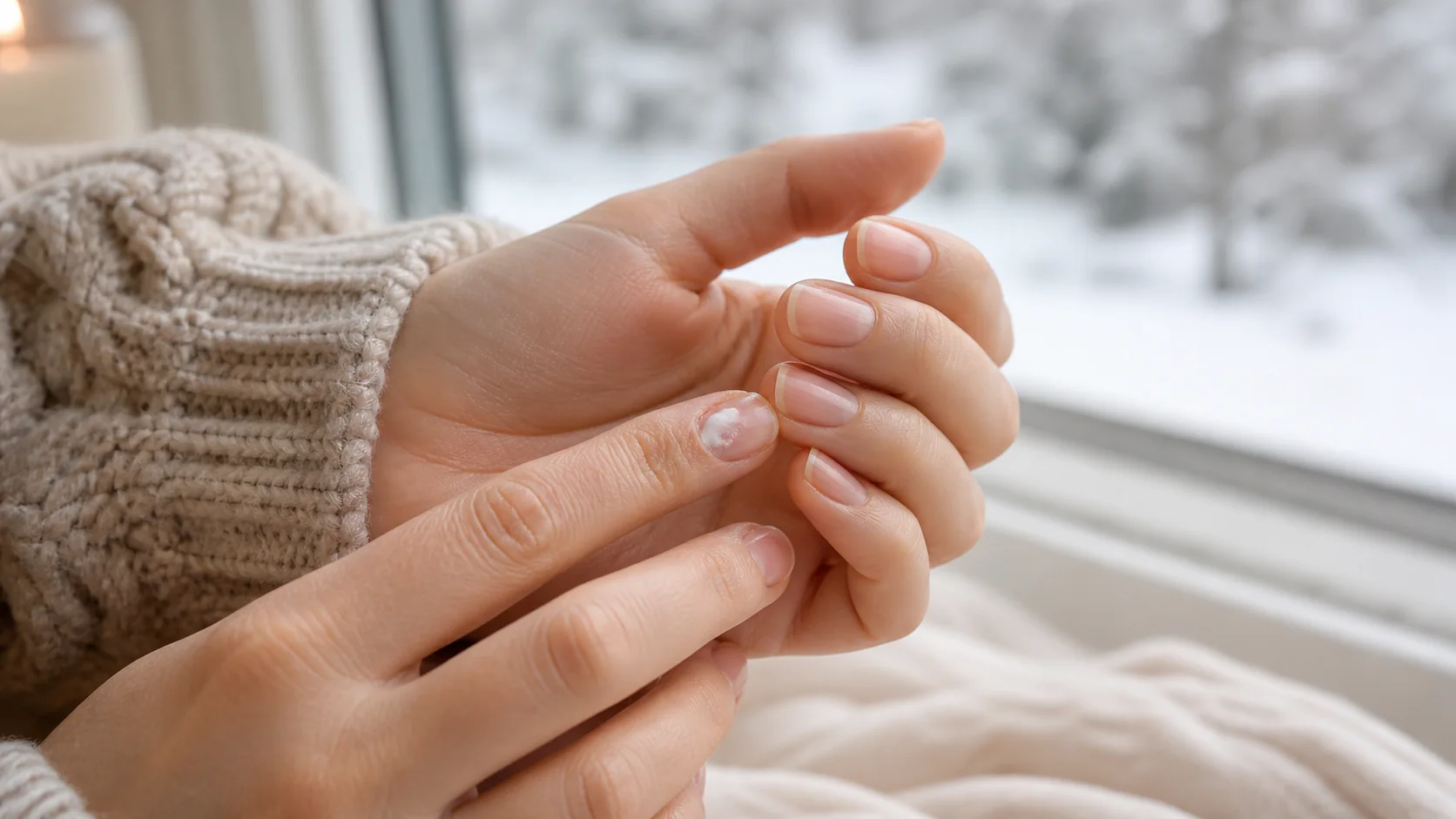
Cold air, indoor heat, frequent handwashing, and wet chores can leave the skin around your nails dry enough to crack. If you want to know how to prevent cuticles from splitting in winter, the most effective approach is not an occasional manicure. It is a small barrier-care routine repeated at the moments when your hands lose the most moisture.
The good news is that you do not need a shelf full of nail products. A gentle cleanser, a rich hand cream, a simple cuticle oil or ointment, and the right gloves can do most of the work.
First, Is It Really Your Cuticle That Is Splitting?
People often use the word cuticle for all the skin around the base and sides of a nail. Technically, the cuticle is the thin layer of dead tissue that adheres to the nail plate. The living skin that frames the base of the nail is the proximal nail fold, while the skin along the sides forms the lateral nail folds.
A small, dry flap at the side of a nail is usually a hangnail. A deeper crack may be a fissure in the nail fold. This distinction matters because living skin should not be cut away. The nail folds help seal the area where a new nail grows and protect it from irritants and germs.
Why Cuticles and Nail Folds Split More in Winter
Winter creates several stresses at once. Outdoor air holds less moisture, cold wind increases exposure, and central heating lowers indoor humidity. Skin around the nails is already thin and is repeatedly bent, rubbed, washed, and exposed to products throughout the day.
Common triggers include:
- Washing with hot water or a strong soap
- Using hand sanitizer many times without moisturizing
- Repeated wet-to-dry cycles from dishes, cleaning, or work
- Going outdoors without gloves
- Picking, biting, or pulling loose skin
- Cutting living cuticle tissue during a manicure
- Frequent acetone use or contact with cleaning chemicals
Any one of these can weaken the skin barrier. Combined, they make the skin stiff and brittle, so an ordinary snag can become a painful split.
The 60-Second Routine After Handwashing
The best time to prevent moisture loss is immediately after your hands get wet. Keep a pump or tube beside the sink so the routine is easy to repeat.
- Use lukewarm water. Hot water can remove more of the oils that help the skin stay flexible.
- Choose a gentle cleanser. A mild, fragrance-free hand wash is a useful choice if scented or foaming soaps leave your hands tight.
- Pat, do not scrub, your hands dry. Leave them slightly damp rather than waiting until the skin feels completely dry.
- Apply hand cream right away. Massage it over the backs and palms, then work a small amount around every nail fold.
- Add oil or ointment where needed. If the sides of your nails still feel rough, press a drop of cuticle oil or a rice-grain amount of petrolatum over them.
Doing this after most washes is more useful than applying a large amount only once a week. If daytime greasiness bothers you, use a lighter cream during the day and save the ointment for bedtime.
Choose Products That Support the Skin Barrier
A practical winter hand product usually combines ingredients that attract water, soften rough skin, and slow moisture loss.
- Humectants such as glycerin, hyaluronic acid, and urea help draw water into the outer skin.
- Emollients such as squalane, shea butter, and plant oils help fill rough spaces and improve flexibility.
- Occlusives such as petrolatum and dimethicone form a protective layer that reduces water loss.
A fragrance-free cream is often a better winter choice than a thin lotion because it supplies more protective ingredients. Cuticle oil can make the skin feel supple, but very dry or cracked areas may benefit from an ointment layered over it. If a product stings, causes redness, or makes itching worse, stop using it.
A Simple Morning, Daytime, and Night Routine
Morning
After washing, apply hand cream around each nail. Let it absorb before touching clothing or using your phone. Put outdoor gloves near your coat so you remember them before your hands meet cold wind.
During the day
Reapply cream after handwashing and after long sanitizer use when practical. If you work with paper, boxes, chalk, fabrics, or other materials that pull moisture from skin, add another application during a break. Carrying a small tube is easier than relying on memory at home.
At night
Massage cream into your hands, sidewalls, and nail folds. Add cuticle oil, then seal the driest spots with a thin coat of ointment. Cotton gloves can keep the product off bedding, but they are optional. The key is consistent coverage, not an elaborate treatment.
Use the Right Gloves for the Right Job
Gloves solve two different winter problems. Warm outdoor gloves shield skin from cold air and wind. Waterproof household gloves protect it from detergent and long water exposure. They are not interchangeable.
Wear household gloves for dishes, bathroom cleaning, hand laundry, and other wet work. If sweat builds up inside, use a cotton liner or take short breaks and dry your hands. Replace gloves that leak. Trapped detergent or water can irritate skin just as easily as direct contact.
Before going outside, apply cream and give it a moment to settle. Then wear clean, dry gloves. Damp gloves can increase friction and keep the skin wet for too long.
Prevent Splits During Manicures
A tidy manicure should not require removing the living seal around the nail. Ask a nail technician not to cut the nail folds, and avoid aggressive pushing, drilling, or trimming at home. Only loose, clearly dead skin should be removed.
If polish remover dries your fingers, limit how often you use it and keep it on the nail plate rather than soaking the surrounding skin. Wash residue away gently, dry your hands, and moisturize afterward. A short break between manicures can also help irritated skin recover.
For more practical hand and nail routines, browse the nail care guides at Glow Finds Daily.
What to Do When a Hangnail Appears
Do not pull, bite, or peel it. Tugging can tear attached living skin and create a larger opening.
- Wash your hands and clean a sharp nail clipper or small cuticle nipper.
- If the flap is hard, soften it briefly with warm water, then pat the area dry.
- Clip only the loose piece close to its base. Do not dig into the side of the nail.
- Apply a bland moisturizer or a thin layer of ointment.
- Cover it with a small bandage if clothing or work will keep catching it.
Do not cut a split that continues into living skin. Protect it from friction and let it heal. People with diabetes, poor circulation, or immune conditions should be especially cautious with broken skin and ask a clinician for personalized guidance.
Mistakes That Keep Winter Splits Coming Back
- Moisturizing only at bedtime. This misses repeated moisture loss during the day.
- Using oil without sealing very dry skin. Oil may soften, but a cream or ointment often provides a stronger barrier.
- Cutting every rough edge. Overtrimming can injure living skin and restart the cycle.
- Ignoring wet work. Cream cannot fully compensate for long detergent and water exposure.
- Using strongly scented products on cracked skin. Fragrance can be irritating for some people.
- Trying to scrub dryness away. Abrasive exfoliation can make small fissures worse.
When a Split May Need Medical Care
Dry skin usually improves with protection and regular moisturizing. Get medical advice if redness, warmth, swelling, throbbing pain, or pus develops around a nail. These can be signs of paronychia, an infection of the nail fold. Spreading redness, fever, severe pain, or red streaks warrant prompt care.
Also consider a dermatologist if cracking keeps returning despite a careful routine, affects many fingers, or comes with intense itching, blisters, or a rash. Hand eczema, contact allergy, psoriasis, and other conditions can resemble ordinary winter dryness.
Frequently Asked Questions
How often should I apply cuticle oil in winter?
Once or twice a day is a reasonable starting point, with extra applications after washing if the area remains rough. Hand cream after each wash matters just as much. Adjust the frequency to how your skin responds.
Is cuticle oil better than hand cream?
They do different jobs. Oil helps soften and condition the skin around the nail, while a cream typically supplies water-binding and barrier-supporting ingredients over a wider area. For very dry skin, use cream first and a small amount of oil or ointment over the nail folds.
Should I push back dry cuticles?
Do not force dry or cracked tissue. If you choose to push back cuticle residue for a manicure, soften the area first and use very light pressure. Stop if it hurts. Never cut the living nail fold.
Can hand sanitizer cause splitting?
Frequent use may contribute to dryness, especially when combined with cold air and repeated washing. Use sanitizer when needed, allow it to dry, and apply hand cream afterward when practical.
How quickly should dry cuticles improve?
Mild roughness may feel better after several days of consistent care, but deeper splits take longer because the skin needs time to repair. Continued picking, wet work, or exposure to irritants will slow progress.
The Bottom Line
To prevent cuticles from splitting in winter, focus on timing and protection. Moisturize after washing, seal rough nail folds at night, wear waterproof gloves for wet chores, wear warm gloves outdoors, and trim only loose hangnails with a clean tool. Those small habits keep the skin flexible and reduce the repeated damage that turns dryness into painful cracks.