
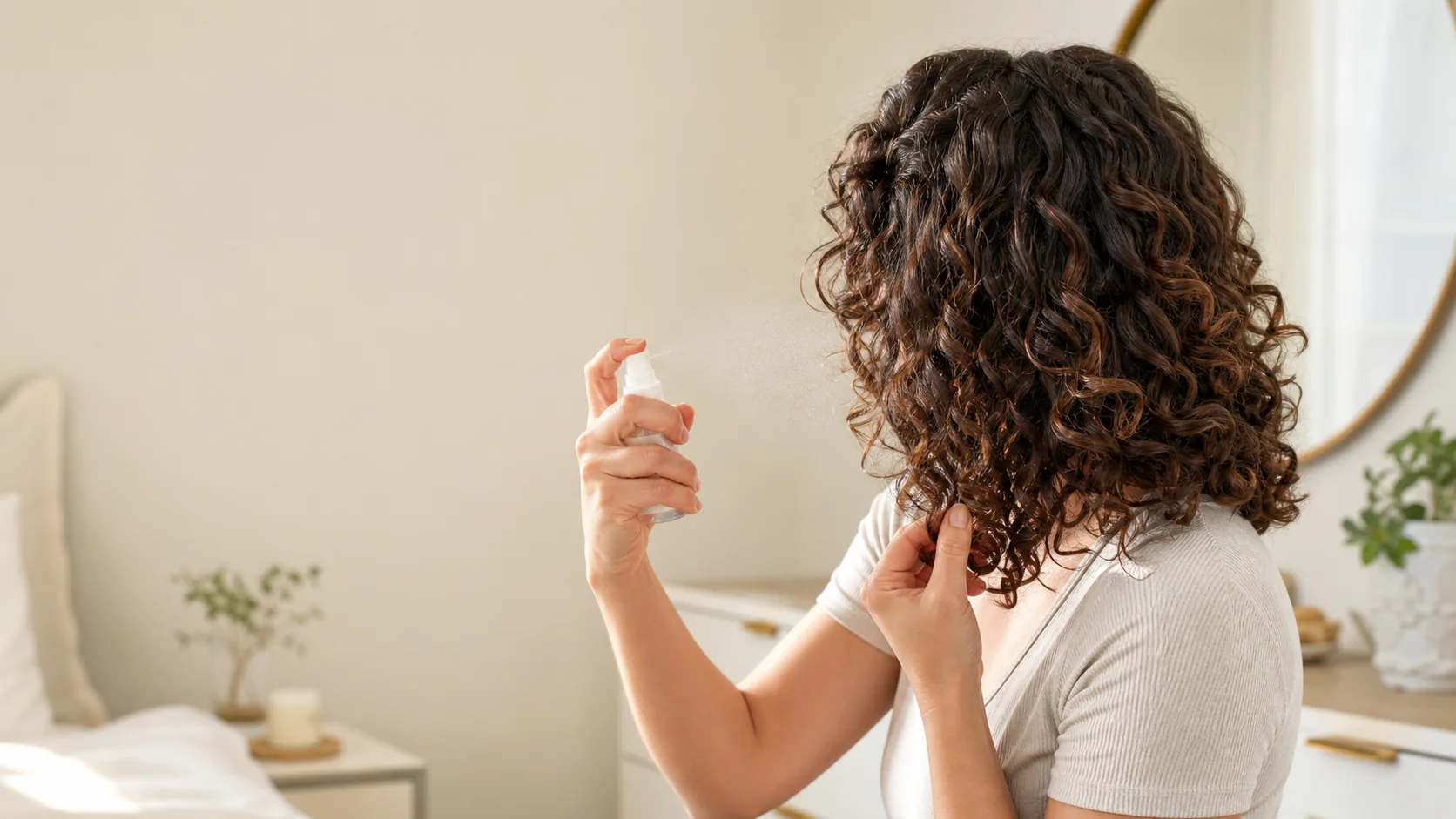
If you want to learn how to refresh second day curls without washing, the first step is not adding more product. It is deciding what your curls actually need. Some mornings call for nothing more than a gentle shake at the roots. Others need a little water, targeted styling product, or a full damp refresh. Choosing the lightest effective method helps restore definition without creating buildup, stiffness, or greasy roots.
This guide gives you a practical way to diagnose your curls, select the right refresh level, and fix common problems such as flat roots, fuzzy sections, stretched pieces, and dry ends.
What Happens to Curls Overnight?
Curls can look different on day two because sleep changes their shape and moisture balance. Pillow friction may roughen the cuticle and create a fuzzy halo. The weight of your head can flatten the crown or stretch curls around the sides. Dry indoor air may pull moisture from the hair, while heavy styling products can make roots feel oily or sticky.
These changes do not all need the same solution. Adding cream to flat but moisturized curls may weigh them down. Soaking a single stretched section may disturb the rest of a good style. A successful refresh starts with a quick diagnosis.
Diagnose Your Curls Before You Refresh
Stand in good light and look at the roots, mid-lengths, and ends separately. Then use this guide:
- Defined curls with a few flyaways: Try a dry refresh or smooth only the visible frizz.
- One or two stretched sections: Use a spot refresh instead of wetting your whole head.
- Soft curls that have lost definition: Apply a light mist refresh.
- Flat roots but good lengths: Lift and dry the roots without adding product to the ends.
- Dry, fuzzy curls throughout: Use a more thorough damp refresh with a small amount of leave-in or gel.
- Greasy, itchy, sticky, or flaky scalp: It may be time to wash rather than cover the problem with more product.
This decision-first approach is the main difference between refreshing curls and simply restyling them. It also protects fine curls from being overloaded.
Five Refresh Levels, From Lightest to Strongest
1. The Dry Refresh
Use a dry refresh when most curls are still intact. Remove your bonnet or scarf, let the hair settle for a few minutes, then tip your head from side to side and gently shake the roots with your fingertips. Do not rake through the lengths.
For a few flyaways, rub one drop of lightweight serum or oil between your palms and lightly glaze the surface. Keep the product away from the roots. Fine hair may need no product at all.
2. The Spot Refresh
Spot refreshing is ideal for curls crushed near the temples, nape, or part line. Wet your hands or use a fine mister on only the damaged section. Smooth the water down the curl clump, add a pea-sized amount of foam or gel, and encourage the original pattern with praying hands, scrunching, or finger coiling.
Clipping the repaired section away from dry hair can prevent nearby curls from becoming frizzy. Let the section dry completely before separating it.
3. The Light Mist Refresh
Choose this method when the overall shape is good but definition has softened. Divide the hair into two to four loose sections. Mist from several inches away until the surface feels slightly damp, not wet. Scrunch upward and pause to see whether yesterday’s product reactivates.
If the curls spring back, stop there. If they still feel fluffy, emulsify a small amount of mousse, foam, or gel with water in your hands and apply it mainly to the outer layer and ends.
4. The Full Damp Refresh
A full damp refresh works when many curls are stretched or dry but the scalp is still clean. Mist section by section until the hair is evenly damp. It should not drip. Smooth each section with wet hands, add a light layer of styler, then scrunch from ends toward roots.
This method gives more control than standing under the shower. It also lets you use less product because some of the original styler often remains in the hair.
5. Wash Instead of Refresh
Refreshing has limits. Wash if the scalp is uncomfortable, odor is present, flakes are sticking to oily roots, or repeated layers of product make the hair dull and coated. Adding water and styler to buildup can create tackiness and reduce volume. If you have been relying on texture sprays or powders, learn how to care for oily hair without overcorrecting with harsh cleansing.
Step-by-Step Second-Day Curl Routine
- Let curls settle. After removing your nighttime protection, wait five to ten minutes. Steam from the bathroom or normal room humidity may help the pattern rebound naturally.
- Check the scalp. Make sure it feels clean enough to continue. A refresh is for styling, not scalp cleansing.
- Separate problem areas. Clip away curls that still look good so you do not disturb them.
- Add water gradually. Start with wet hands or a fine mist. Water should soften the old product and make the curl flexible.
- Add only what is missing. Use foam for airy volume, gel for hold, or a formulated leave-in for genuine dryness.
- Re-form the pattern. Smooth, scrunch, or finger coil based on how much repair the section needs.
- Lift the roots. Insert clips at the crown or diffuse with your head tilted for more volume.
- Dry fully. Air-dry or diffuse on low heat and low airflow. Touching damp curls often creates frizz.
- Finish gently. Once dry, scrunch out any firm gel cast with clean, dry hands.
Water, Leave-In, Mousse, or Gel?
Water only is best when yesterday’s products reactivate easily and the hair does not feel dry. It keeps the routine light and reduces buildup.
Leave-in conditioner is useful when curls feel rough, brittle, or unusually dry. Choose a leave-in that was formulated to remain in the hair. Do not mix ordinary rinse-out conditioner with water in a spray bottle. The mixture may not be preserved or designed for leave-on use.
Mousse or foam suits fine curls, loose curls, waves, and anyone prioritizing volume. It can restore shape with less weight than a rich cream.
Gel helps control a fuzzy outer layer and gives longer-lasting definition. Dilute a small amount between wet palms before glazing or scrunching. More gel is not always better, especially when old product is already present.
Oil or serum can reduce surface friction and add shine, but it does not hydrate hair. Use it after drying, not as a substitute for water.
Adjust the Method for Your Hair
Fine or Low-Density Curls
Use the least water and product possible. Begin with a dry root lift, then spot refresh only obvious problem areas. Choose foam or a light gel rather than butter or heavy cream. If tangles are part of the problem, follow a gentle method for detangling fine hair without breakage instead of brushing dry curls.
Coarse, Dense, or Very Dry Curls
Work in sections so moisture reaches the inner layers. Damp hands may not be enough, so mist more thoroughly and use a small amount of leave-in before gel. Give dense hair enough drying time because a damp interior can stay compressed and lose shape.
Low-Porosity Hair
Products tend to sit on the surface, so start with warm water on your hands or a light mist and use thin formulas. Avoid stacking cream, oil, and gel. Gentle warmth from a diffuser can help the water evaporate without leaving hair coated.
High-Porosity Hair
These curls may absorb a mist quickly and still feel dry. Refresh in sections, add a small amount of leave-in where needed, and seal with gel for hold. Pay special attention to ends, which often lose moisture first.
How to Fix Flat Roots Without Soaking Your Curls
Flat roots are often a shape problem, not a moisture problem. Place your fingertips against the scalp and gently shift the roots in the opposite direction from where they dried overnight. Change your part, add root clips, or diffuse the crown for one to three minutes on low airflow.
If roots are oily, skip oils and creams. A clean scalp plus careful root lifting usually creates better volume than adding more styling product.
How to Smooth Frizz Without Breaking Curl Clumps
Frizz is not automatically damage, and a little surface texture is normal. To polish a fuzzy section, wet your palms, sandwich the curl clump between them, and glide downward once. Add a trace of gel only if water does not restore the shape. Avoid repeatedly rubbing or scrunching the same section.
If frizz begins immediately after every wash, review the causes of frizzy hair after a shower. Your cleansing, towel, product order, or drying method may need attention.
Common Refreshing Mistakes
- Soaking every curl by default: This increases drying time and can erase sections that already looked good.
- Adding rich cream every morning: Repeated layers can flatten the pattern and attract residue.
- Brushing dry curls: This separates clumps, causes frizz, and may increase breakage.
- Using high heat or forceful airflow: Both can disturb the pattern and dry the surface too quickly.
- Touching while curls are damp: Wait until the hair is fully dry before fluffing or breaking a cast.
- Ignoring scalp discomfort: Itching, tenderness, persistent flakes, or odor are signs to cleanse or seek professional advice.
Make Tomorrow’s Refresh Easier Tonight
Gather long curls loosely at the top of the head in a pineapple, or use a loose buff, satin bonnet, or satin pillowcase. Short curls may do better in a bonnet without a hair tie. Make sure hair is fully dry before bed because sleeping on damp curls can stretch the pattern and keep the scalp moist for hours.
Night protection is only one part of a healthy routine. These essential rules for healthy hair can help reduce the damage that makes refreshing harder.
Frequently Asked Questions
Can I refresh curls with only water?
Yes. Water can reactivate many water-based styling products. Start with wet hands or a very fine mist. Add more styler only if the curl does not regain definition or hold.
Should I refresh curls every day?
You can refresh as needed, but daily layers of water and product may cause buildup or repeated swelling and drying. Protect curls at night and use targeted refreshes to reduce how much manipulation they receive.
Why do my curls get frizzier when I refresh them?
Common causes include too much airflow, rough scrunching, touching before dry, spraying from too close, or applying product unevenly. Work in small areas, use gentle pressure, and let curls dry completely.
Can I use a regular conditioner mixed with water?
Choose a properly formulated leave-in or curl refresher instead. A homemade mix using rinse-out conditioner may not be designed or preserved for storage in a spray bottle.
When should I stop refreshing and wash?
Wash when the scalp feels oily, itchy, sore, or coated, when odor develops, or when curls no longer respond to water. A clean base will usually style better than another layer of product.
The Bottom Line
The best way to refresh second-day curls without washing is to use the lightest method that solves the visible problem. Preserve the curls that still look good, repair only the sections that need help, and match your product to the missing quality: water for reactivation, leave-in for dryness, foam for light volume, and gel for hold. When the scalp or hair feels coated, wash instead of adding another layer.