
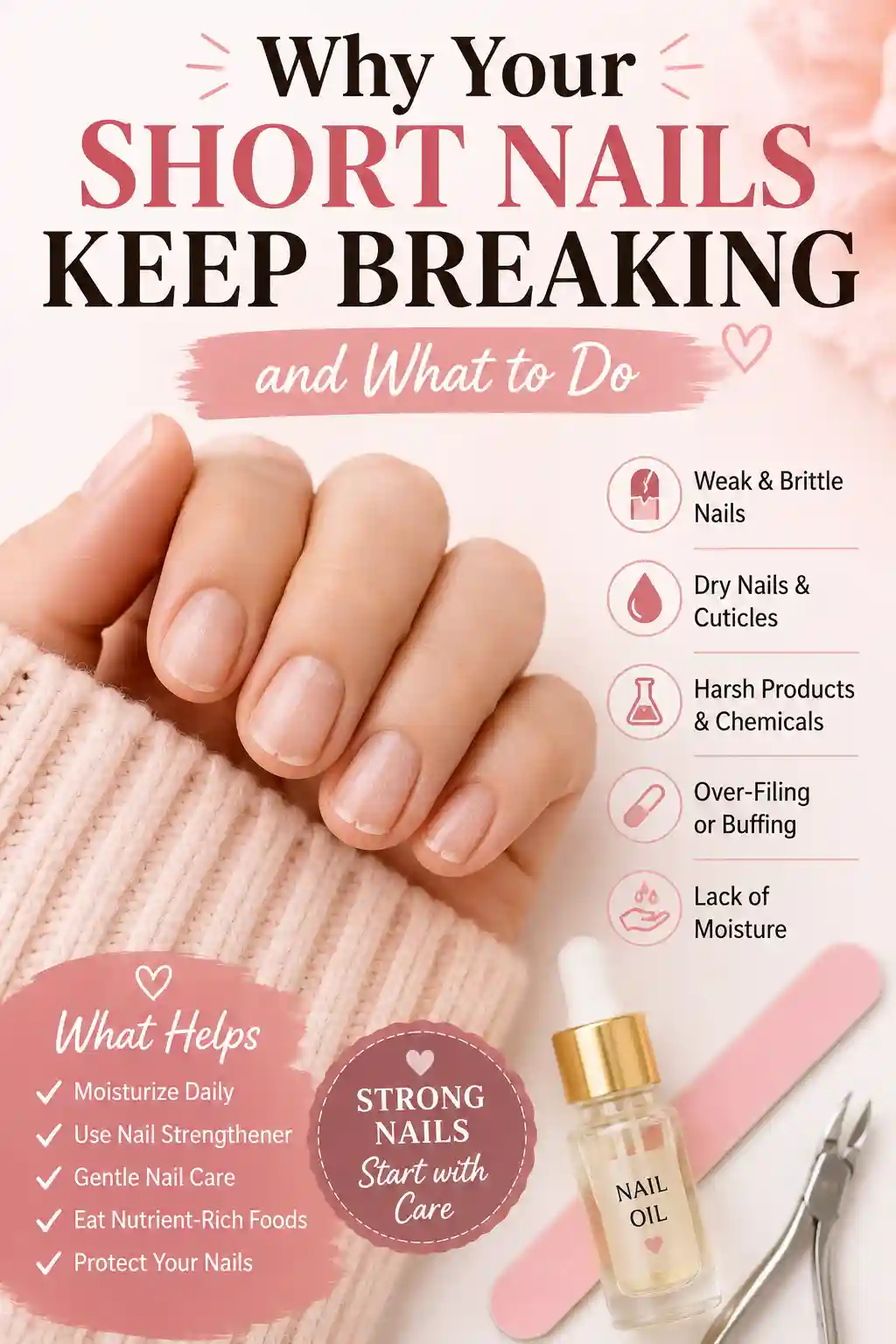
Short nails are supposed to be the low-maintenance option. No snags, no drama, no nail catching on everything you touch. But if your nails keep breaking even when they are short, something is quietly working against them. The good news is that most of the reasons are fixable once you know what to look for. This guide breaks down the most common causes of weak, breakage-prone nails and gives you clear, practical steps to strengthen them over time.
What Causes Short Nails to Break?
Breakage is not random. It usually comes from one or more of these common causes.
1. Your Nails Are Dehydrated
Nails need moisture to stay flexible. When they dry out, they become brittle and snap more easily. Frequent handwashing, harsh soaps, acetone-based removers, and exposure to dry air all pull moisture away from the nail plate.
If your nails peel in layers or break horizontally across the tip, dehydration is often the reason.
What helps: Apply a nail or cuticle oil daily. Look for products that contain jojoba oil, vitamin E, or argan oil, as these are commonly used in nail care formulas designed to improve flexibility. Buyers should verify ingredient lists before purchasing.
2. You Are Using Acetone Too Often
Acetone removes polish fast, but it also strips natural oils from the nail and surrounding skin. Using it every few days puts repeated stress on the nail structure.
If you paint your nails often, consider switching to a non-acetone remover for lighter polish colors and saving acetone for gel or stubborn formulas only.
3. Your Diet Is Missing Key Nutrients
Nails are made largely of keratin, a protein. If your diet is low in protein, biotin, zinc, or iron, your nails may grow weaker and break more easily. This is common but often overlooked.
Foods like eggs, leafy greens, lean meats, nuts, and legumes support overall nail health. If you suspect a nutritional gap, speaking with a healthcare provider is a better step than guessing with supplements.
Note: Nail supplements are widely marketed, but their effectiveness varies by individual. A professional evaluation gives you a clearer picture before spending money on products that may not address your specific situation.
4. Your Filing Technique Is Damaging the Nail
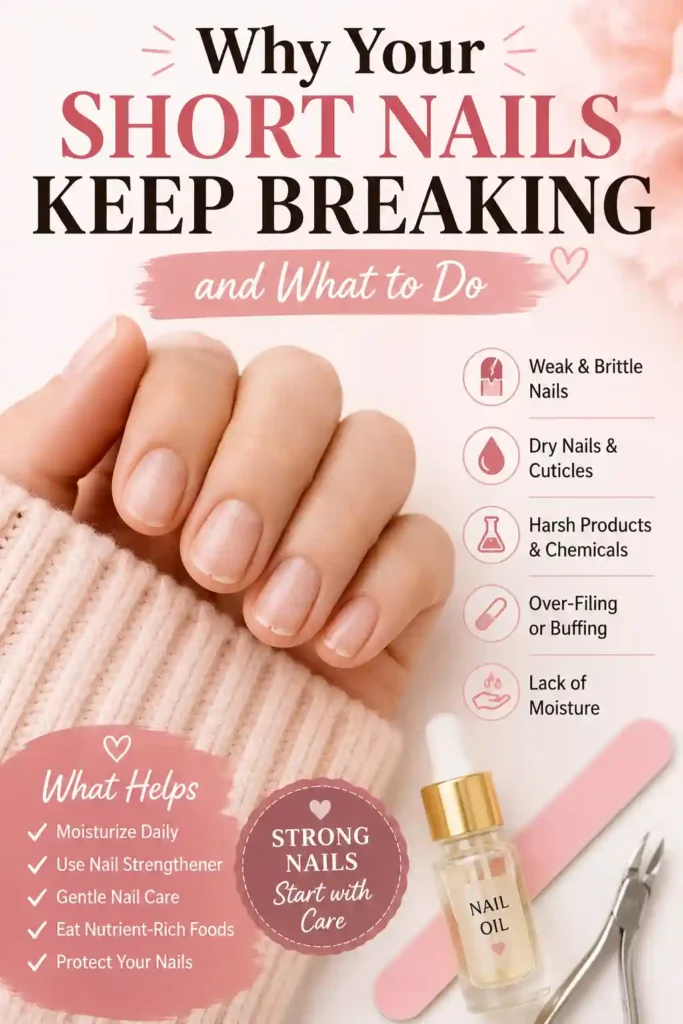
Filing back and forth in a sawing motion creates tiny cracks in the nail edge. These cracks spread and cause the nail to peel or break from the tip inward.
File in one direction only, moving from the outer edge toward the center. Use a fine-grit file rather than a coarse one, which is more suited to acrylic or gel work than natural nails.
5. You Are Using Your Nails as Tools
Opening cans, peeling stickers, picking at labels, and typing with nail tips rather than fingerpads all put side pressure on the nail edge. Short nails are not immune to this kind of stress.
If this is a habit, trying to use your fingerpads for pressure-based tasks can reduce daily mechanical damage over time.
6. Water Exposure Is Weakening Them
Nails expand when wet and contract when dry. Repeated cycles of soaking and drying weaken the nail structure gradually. Dishwashing, long baths, and frequent hand soaking fall into this category.
Wearing protective gloves while doing dishes or cleaning reduces contact time significantly.
7. Your Base Coat or Polish Is Old or Low Quality
Some older polishes and base coats contain formaldehyde, toluene, or camphor, which can dry out or weaken nails over time. Low-quality formulas may also peel early, taking layers of the nail plate with them.
Look for products labeled as 5-free, 7-free, or 10-free, which indicates they have removed a range of potentially harsh ingredients. Buyers should check current product labels, as formulations change.
8. You Have an Underlying Health Condition
In some cases, nails that break frequently or show unusual texture changes can be related to thyroid issues, psoriasis, anemia, or other health conditions. If your nails are breaking alongside other unexplained symptoms, a visit to a healthcare provider is worthwhile before trying more nail products.
This is not something a base coat can fix.
How to Strengthen Short Nails Step by Step
These steps work together. Skipping one while doing the others will slow your progress.
Step 1: Moisturize consistently. Apply cuticle oil once or twice a day. Push cuticles back gently rather than cutting them, as cuticles act as a protective seal for the nail base.
Step 2: Reduce acetone use. Switch to a gentler remover when acetone is not necessary.
Step 3: Protect nails from water. Wear gloves during wet tasks and dry your hands thoroughly after washing.
Step 4: Improve your filing method. Use a fine-grit file, file in one direction, and smooth the nail edge after shaping.
Step 5: Keep a base coat on. A good nail strengthening base coat can add a thin layer of protection even when you are not wearing color. Look for formulas containing keratin, calcium, or strengthening polymers. Results vary, so buyers should check reviews and formulas before purchasing.
Step 6: Be patient. Nails grow approximately 3 to 4 millimeters per month on average. Improvements take several weeks to become visible.
Products That May Help
There are several product categories worth exploring for nail strengthening. These are general options, not specific endorsements, as results depend on individual nail type and condition.
Nail strengthening base coats are designed to add a protective layer and are widely available at different price points. Some include keratin or calcium-based formulas.
Cuticle oils with jojoba, argan, or vitamin E are commonly recommended for improving nail flexibility.
Nail-safe acetone alternatives are available for everyday polish removal and are gentler on the nail plate.
Protective gloves for household tasks are one of the simplest and most underused tools for reducing water and chemical damage.
If you are considering supplements like biotin, speak with a healthcare provider first to confirm whether a deficiency is actually present. Supplementing without need may not produce the results you expect.
Short Nail Care Tips Worth Keeping
- Keep nails at a consistent short length rather than letting them grow and then cutting back sharply, as uneven cycles stress the nail edge.
- Avoid peeling off gel or regular polish. Always soak it off properly.
- Stay hydrated. Nails, like skin, reflect overall hydration levels.
- Do not skip the base coat just because your nails are short. A base coat adds protection at any length.
Common Mistakes to Avoid
- Cutting nails when they are completely dry, which increases splitting risk
- Filing immediately after a shower or hand soak when nails are soft
- Using low-quality files that are too coarse for natural nails
- Expecting supplements to fix a problem caused by technique or dehydration
- Ignoring the cuticle area, which affects the health of new nail growth
FAQs
Why do my short nails keep breaking even when I am careful?
If your nails break despite careful handling, dehydration, diet, or water exposure are often the cause. Check whether you are moisturizing regularly, reducing acetone use, and protecting nails from long water contact. If breakage continues alongside other symptoms, a healthcare provider visit is a reasonable step.
Does nail hardener actually help with breakage?
Nail hardeners can add a protective layer, but they vary in formula. Some strengthen with repeated use, while others may make very dry nails more brittle if overused. Following product instructions carefully matters more than applying more coats.
Is peeling nails different from breaking nails?
Yes. Peeling usually involves the nail splitting into layers horizontally, which often points to dehydration or exposure damage. Breaking involves the nail snapping, which can come from brittleness, mechanical stress, or structural weakness. Both can occur at the same time.
Can short nails still get nail care treatments?
Yes. Cuticle oil, strengthening base coats, and protective measures work at any nail length. Short nails can still benefit from consistent care routines.
How long does it take to see improvement in nail strength?
Most people notice a difference after four to six weeks of consistent care, since that is roughly how long it takes for new nail growth to become visible. The nails you have now reflect the care from the past few months, so patience is part of the process.
Should I take biotin for weak nails?
Biotin is widely associated with nail and hair health, but evidence of its effectiveness for people who are not deficient is mixed. It is worth checking with a healthcare provider before adding supplements, especially since underlying conditions or dietary gaps are more reliably addressed with professional guidance.
What nail file grit is best for short natural nails?
A fine-grit file in the 180 to 240 range is generally recommended for natural nails. Coarser files are designed for acrylic or gel and can create micro-tears in natural nail edges.
Final Verdict
Short nails break for specific reasons, and most of them are within your control. Dehydration, improper filing, too much water exposure, acetone overuse, and technique habits are the most common factors. Addressing these through consistent moisturizing, protective measures, and gentler product choices is usually more effective than relying on a single product to fix the problem.
If you have been dealing with breakage for a long time without improvement, or if you notice other nail changes alongside the breakage, checking in with a healthcare provider will give you more useful answers than another bottle of base coat.
For more nail care guidance, see our posts on everyday short nail ideas, beginner nail care routines, and how to choose the right nail products for your nail type.