
Learning how to repair peeling layers at fingernail tips starts with realistic expectations. Once layers of the nail plate have separated, they cannot be permanently fused back into healthy nail. The immediate goal is to stop the edge from catching and peeling farther. Long-term repair comes from protecting the nail while stronger material grows forward from the matrix.
Peeling across the free edge is often called lamellar splitting or onychoschizia. Repeated wet-dry cycles, detergents, polish removal, aggressive buffing, picking, and artificial-nail removal are common triggers. This guide shows how to stabilize the tips, reduce daily damage, and recognize signs that need medical evaluation.
What Peeling Nail Layers Mean
The nail plate is made of tightly packed keratin layers. Water makes the plate swell, and drying makes it contract. Frequent hand-washing, dishwashing, swimming, cleaning, and long soaking can repeat that movement until the layers at the tip begin to separate.
Chemical and mechanical stress can add to the problem. Acetone and other removers temporarily dehydrate nails. Peeling off polish, gel, dip, press-ons, or acrylic material can remove surface nail cells. Filing the top of the plate and using nails as tools can thin or split the edge.
First Aid for a Peeling Nail Tip
1. Do Not Pull the Layer
Even if a flap looks nearly detached, pulling can extend the split into firmly attached nail. Wash and dry your hands, then work in good light.
2. Trim to a Stable Length
Use clean sharp clippers to shorten the nail to just beyond the attached portion. Make small cuts instead of forcing one large cut through a brittle edge. Do not cut into pink attached nail or painful tissue.
3. File in One Direction
Use a fine-grit glass or cushioned file to smooth the free edge. File gently from each side toward the center. Stop as soon as the edge no longer catches. Do not buff down the top of the peeling area, since thinning the remaining plate can make it weaker.
4. Moisturize the Nail and Surrounding Skin
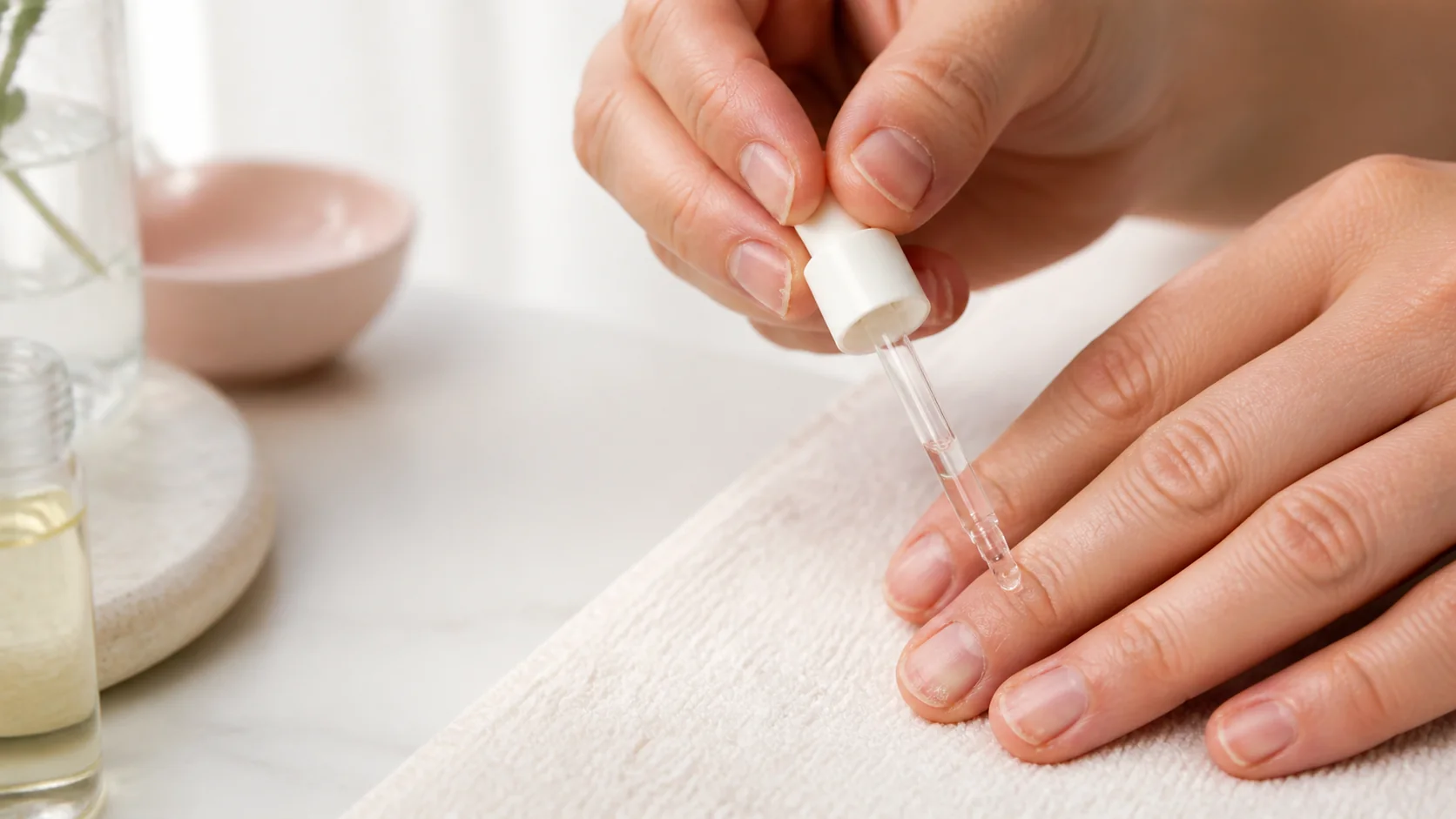
Apply a thick fragrance-free hand cream or petrolatum to the nail plate, cuticle, and skin around the nail. A small amount of cuticle oil can improve flexibility and reduce dryness, but oil does not glue separated layers back together.
5. Protect the Edge
For a mildly peeling tip, a clear base coat may provide temporary surface protection if polish does not irritate your skin. Remove it gently when it chips. Avoid home repairs with household superglue, especially if the nail is painful, cracked into attached tissue, or the skin is broken.
The Two-Week Recovery Routine
- Keep nails short and softly rounded.
- Moisturize after every hand wash and before bed.
- Wear cotton-lined or well-fitting waterproof gloves for dishes and cleaning.
- Use mild soap and lukewarm water when possible.
- Pause gels, acrylics, dip powder, press-ons, and frequent polish changes.
- Avoid scraping labels, opening cans, or prying objects with your nails.
- File new roughness early so it cannot catch and travel farther.
Visible improvement takes time because fingernails grow slowly. The damaged area must move toward the free edge and be trimmed away. Consistency matters more than using many products.
Reduce Wet-Dry Cycling
Water exposure is one of the most overlooked causes of peeling tips. Nails absorb water more readily than skin, then lose it again. You do not need to avoid hand hygiene, but you can reduce unnecessary soaking.
Wear gloves for dishwashing, laundry by hand, and household cleaning. Remove wet gloves promptly and let the hands dry. After washing, pat rather than rub, then apply hand cream while the skin and nails are slightly damp.
If you swim often, keep nails short, rinse after the pool, dry carefully, and moisturize. Do not leave polish lifting at the edges, where water can collect and encourage more picking.
Use Polish and Remover More Gently
Take a manicure break while the plate is actively peeling. When you resume, use a base coat and avoid peeling polish off. Saturate a cotton pad with remover, press it against the nail briefly, and wipe without forceful scraping. Wash hands afterward and moisturize.
Both acetone and non-acetone removers can dry nails. Non-acetone formulas may require more rubbing or longer contact, so the gentlest option is the one that removes your specific polish efficiently without scraping.
Gel, dip, and acrylic systems can be worn safely by some people, but repeated filing and improper removal increase damage. Never pick or pry enhancements away. If the nail plate is thin, sore, or peeling, wait for recovery before another application.
Do Nail Hardeners Help?
A hardener may temporarily reduce bending, but a very rigid nail can also snap. Some formulas irritate skin or make already brittle nails feel worse. Use only as directed and stop if peeling, dryness, pain, or skin irritation increases.
A plain protective base coat is often a simpler first step. Do not stack hardener, gel, glue, and wrap systems on a nail that needs a break from cosmetic trauma.
Nutrition and Supplements
Most isolated peeling at the tips comes from external stress, especially when toenails remain strong. A balanced diet with adequate protein, iron, zinc, and other nutrients supports normal growth, but supplements are not an instant repair.
Do not start high-dose biotin automatically. Biotin can interfere with certain laboratory tests, and evidence for routine use in otherwise healthy people is limited. Ask a clinician before taking supplements, especially if several nails changed suddenly or you have fatigue, hair loss, weight changes, or other symptoms.
Common Mistakes That Extend the Peeling
- Peeling the loose layer: It can lift attached nail cells with it.
- Buffing until the surface looks smooth: This removes more plate thickness.
- Keeping nails long: Longer tips act as levers and catch more easily.
- Applying oil before polish: It may affect adhesion and encourage early lifting. Moisturize between manicures instead.
- Using nails as tools: Prying and scraping repeatedly stress the free edge.
- Ignoring glove moisture: Damp gloves keep nails exposed to water.
- Covering pain or discoloration: Cosmetic camouflage can delay diagnosis.
When Peeling May Need a Dermatologist
See a dermatologist or clinician if peeling affects many nails, begins suddenly, continues despite several months of protection, or occurs with pain, swelling, redness, pus, nail lifting, thickening, pitting, unusual color, or a dark streak. Medical causes can include psoriasis, eczema, thyroid disease, iron deficiency, fungal infection, and other conditions.
Do not self-treat a green, black, or painful nail with glue or polish. If a crack reaches attached pink nail or bleeding occurs, protect the area and seek appropriate care.
How to Prevent Peeling Tips From Returning
Keep a file and hand cream where you wash your hands most often. Wear gloves before wet work, not after damage begins. Space out manicures, avoid aggressive surface preparation, and use professional removal for enhancements when needed.
Choose nail length based on your daily activities. Shorter nails are more practical for frequent typing, cleaning, childcare, gardening, or sports. Browse more practical routines in the Glow Finds Daily nail section.
Frequently Asked Questions
Can peeling nail layers grow back together?
No. The separated section cannot become intact nail again. Protect it from further splitting while healthy nail grows forward, then trim away the damaged edge.
Should I cut off the peeling part?
Trim only loose free edge that can be removed without pain. Smooth it with a fine file. Do not cut into attached nail or skin.
Is acetone always worse than non-acetone remover?
Both can dehydrate nails. Acetone works faster for some products, while non-acetone remover may require more rubbing. Minimize contact time and mechanical scraping, then moisturize.
Can cuticle oil repair peeling nails?
Oil can improve flexibility and reduce dryness, but it cannot reconnect separated layers. It works best as part of a protection routine.
How long does recovery take?
The peeling portion must grow to the edge and be trimmed away. Fingernails take months to replace fully, though short protected tips may look better sooner.
The Bottom Line
To repair peeling layers at fingernail tips, stop pulling, trim and file the edge gently, moisturize often, reduce wet-dry cycles, and pause traumatic manicure practices. The damaged layer will not fuse back together, but you can prevent it from traveling while healthier nail grows. Persistent, painful, widespread, or discolored changes deserve professional evaluation.