You step out of the shower with hair that looks smooth and shiny. Ten minutes later it has doubled in size and turned into something closer to a dandelion. If this happens to you every wash day, the problem is not your hair being difficult. It is a physical reaction happening at the strand level, and once you understand it, frizz becomes a lot easier to manage.
This post may contain affiliate links. If you buy through these links, we may earn a small commission at no extra cost to you.
What Happens to Hair When It Gets Wet
Each strand of hair is made of three layers. The innermost layer is the medulla, which is often missing in fine hair. The middle layer is the cortex, which makes up most of the hair’s structure and holds its strength and color. The outer layer is the cuticle, made of overlapping scales that work like tiles on a roof. When those scales lie flat, hair looks smooth and holds moisture well.
Water changes this. When hair absorbs water, it forms temporary hydrogen bonds with the keratin inside the cortex. This causes the strand to swell by around 10 to 15 percent in diameter. That swelling pushes the cuticle scales upward and out of their flat position.
Once hair dries with the cuticle still raised, it behaves differently than smooth hair. Rough, lifted cuticles catch on each other and on the surrounding air, which is what creates the frizzy texture you see and feel. On humid days, this effect gets worse because moisture in the air keeps re-entering the hair shaft and disrupting whatever style you tried to set, which is why humidity causes curls and blowouts to fall apart so quickly.
Five Reasons Hair Frizzes After Washing
Hot Shower Water
Washing with very hot water swells the hair shaft more than warm or cool water does. This forces the cuticle open wider, and hair tends to dry in a rougher, puffier state as a result.
Sulfate Shampoos and pH Imbalance
Many everyday shampoos use strong detergents such as sodium lauryl sulfate and sodium laureth sulfate to create a thick lather. These ingredients strip away natural oils along with dirt. Hair and scalp also do best at a slightly acidic pH between 4.5 and 5.5, while many sulfate shampoos sit closer to 6.0 or 7.0. That mismatch can leave the cuticle more open than it should be.
Hard Water and Chlorine
Standard tap water often contains chlorine, along with minerals like calcium and magnesium. Chlorine strips natural oils, and mineral buildup can coat the hair shaft over time, making it harder for moisture to absorb evenly. Both issues can contribute to dryness and frizz.
Rough Towel Drying
Wet hair is more fragile than dry hair. Rubbing it with a regular terry cloth towel creates friction that roughens the cuticle and can lead to breakage over time. This is one of the simplest habits to fix, since it just requires changing how you dry your hair, not what you wash it with.
High Porosity Hair
Some hair has a cuticle that is already lifted or damaged from heat styling, chemical treatments, or sun exposure. This type of hair absorbs moisture from the air very quickly, which can cause frizz to show up almost immediately after a shower.
What Is Hair Porosity and Why It Matters
Porosity describes how easily your hair absorbs and holds onto moisture, based on the condition of the cuticle.
Low porosity hair has cuticles that are tightly closed. It takes a while to get wet and can resist absorbing products, but it holds moisture well once it does.
Medium porosity hair has cuticles that are evenly spaced, which usually means a good natural balance of moisture absorption and retention.
High porosity hair has gaps or damage in the cuticle. It absorbs water and product quickly, but loses that moisture just as fast, which often leads to frizz, tangling, and dryness.
Two Quick Tests You Can Try
The float test: drop a clean strand of hair into a glass of water. If it floats, your hair leans low porosity. If it sinks slowly, it is likely medium. If it sinks right away, it is likely high porosity.
The spray bottle test: mist a dry section of hair with water. If the water sits on top in beads, that suggests low porosity. If it absorbs at a moderate pace, that suggests medium. If it disappears almost instantly, that suggests high porosity.
A Few Porosity Myths Worth Knowing
Porosity is not entirely fixed by genetics. Heat styling, coloring, and sun exposure can shift hair toward higher porosity over time, even if it started out at a lower level. It is also common to have different porosity levels across one head, since some sections get more sun or friction than others.
How to Stop Frizz After a Shower
Finish with a cooler rinse. Ending your shower with 10 to 30 seconds of cooler water can help the hair shaft swell less than it would with hot water, which allows the cuticle to settle flatter as it dries.
Choose a gentler shampoo. Based on the ingredients typically listed, sulfate-free formulas with milder cleansing agents can clean hair without stripping as much natural oil. Buyers should check the ingredient list and choose one that suits their hair type.
Consider a shower filter. A shower filter may help reduce chlorine and mineral buildup from tap water, which can support better moisture balance in hair over time.
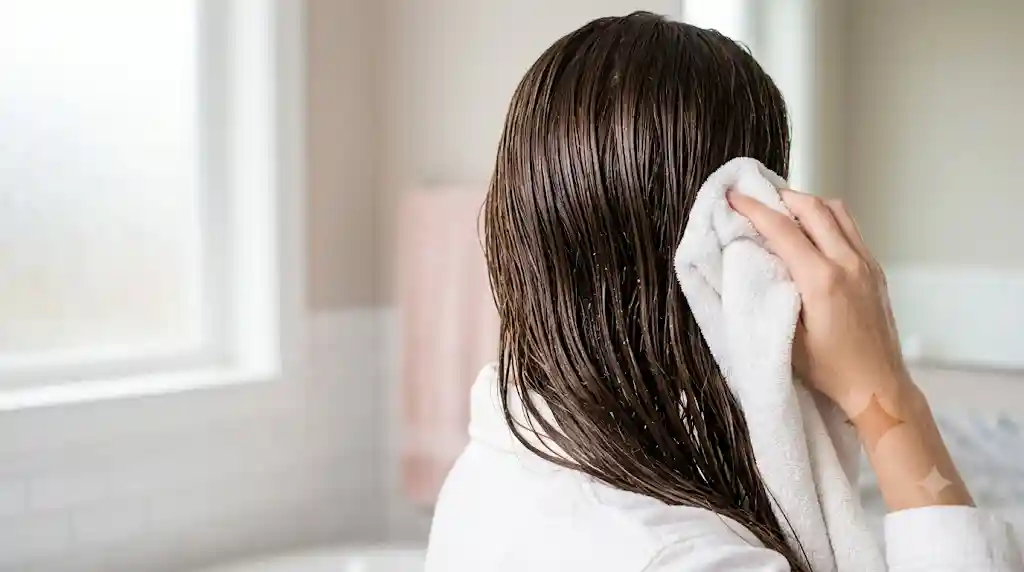
Switch to a microfiber towel. Instead of rubbing hair with a regular towel, gently press and scrunch it with a microfiber towel or soft t-shirt. This reduces friction and helps keep the cuticle smoother.
Try plopping for wavy or curly hair. After applying a leave-in product to damp hair, lower your curls onto a flat microfiber towel or t-shirt and wrap it loosely around your head for 20 to 30 minutes. This method can help curls dry with more definition and less frizz.
Seal with a leave-in product. A lightweight leave-in conditioner, hair oil, or anti-frizz serum applied to damp hair can help smooth the cuticle and create a barrier against humidity. This step works best for people who deal with frizz regularly, and it may be less necessary for very low porosity hair that already holds moisture well.
Frequently Asked Questions
Why is my hair frizzy only after showering and not before?
Hair frizzes as it dries because the cuticle stays lifted from the water it absorbed during washing. Dry hair that has not been recently wet does not go through that same swelling and drying cycle.
Does hair porosity change over time?
Yes. Heat, chemical treatments, and sun exposure can raise porosity over time, even if your hair was less porous before.
Can hard water alone cause frizz?
Hard water can contribute to frizz through mineral buildup and dryness, but it is usually one factor among several, including heat, product choice, and towel drying habits.
Is a cold water rinse actually necessary?
It is not required, but a cooler final rinse may help reduce cuticle swelling compared to a hot water rinse, which can support smoother-looking hair as it dries.
If you are dealing with frizz after time in the pool or ocean, our guide on protecting hair from chlorine and post beach hair care routines covers additional steps worth adding to your routine.