
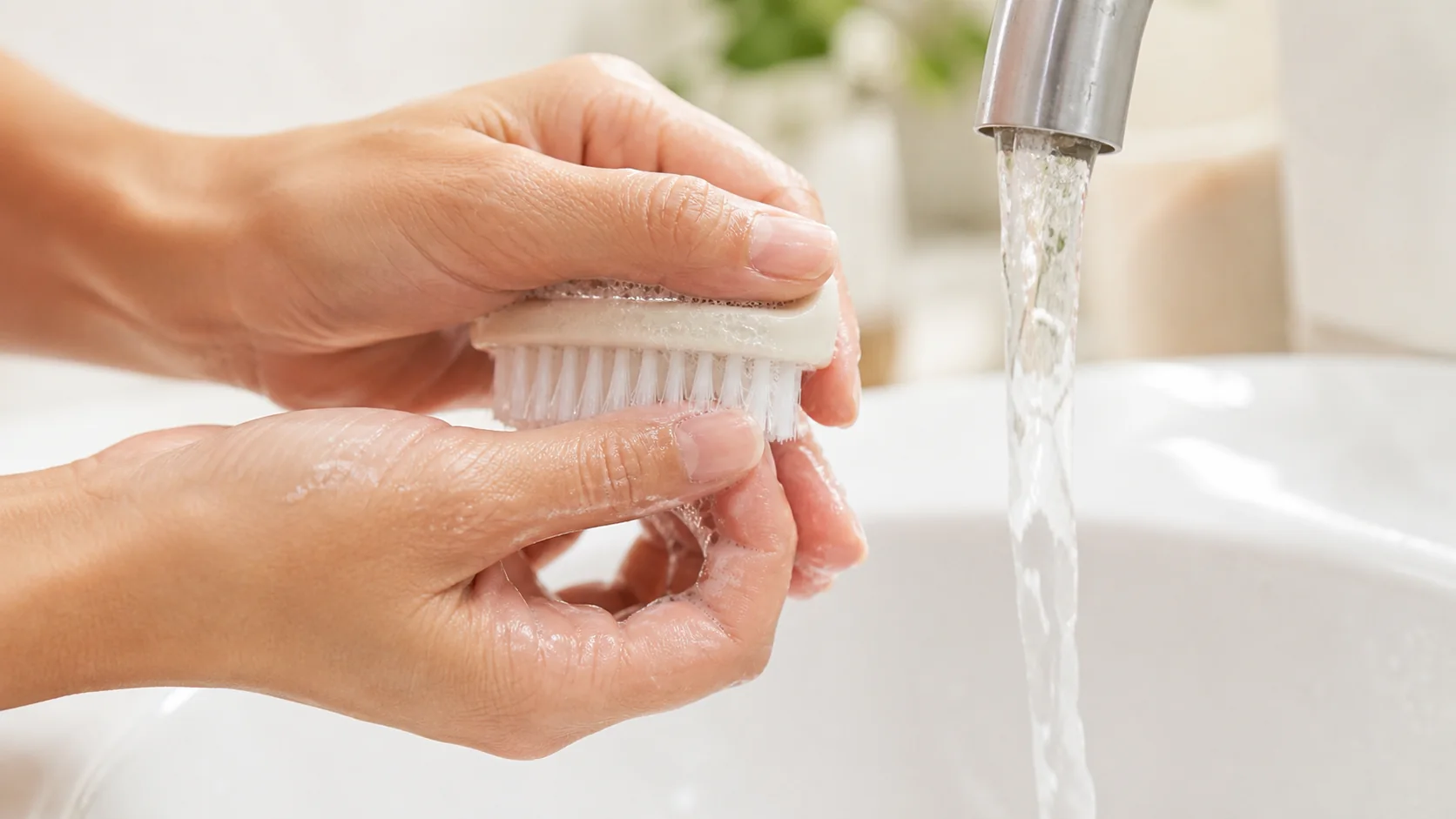
Dirt under the nails is usually easier to remove after soap and water have loosened it. Digging with scissors, tweezers, a metal file, or another fingernail may look effective, but it can injure the delicate skin beneath the free edge and create more space for debris to collect.
The safest approach to how to remove dirt from under nails without scraping is simple: soften the debris, create gentle friction with a clean soft brush, rinse under running water, and repeat only where necessary. The technique matters more than force.
Why You Should Not Dig Under the Nail
The skin attached beneath the free edge is called the hyponychium. It helps form a seal between the nail plate and fingertip. Pushing a sharp object into this area can cause pain, bleeding, separation, or a small opening where irritants and germs can enter.
Repeated digging may also make the underside feel increasingly sensitive. If cleaning hurts, stop. Hygiene should remove loose material, not detach living skin from the nail.
The Basic Soap, Water, and Brush Method
1. Wet the hands under clean running water
Use comfortably warm or cool water. Very hot water can dry the skin. Let the water reach the fingertips for several seconds so packed debris begins to soften.
2. Work soap into a full lather
Rub the palms, backs of the hands, between the fingers, around the nail folds, and over the fingertips. The Centers for Disease Control and Prevention recommends scrubbing the hands for at least 20 seconds, including beneath the nails.
3. Use a soft, clean nail brush
Add soap to the wet bristles. Hold the brush against the underside of the free edges and move it with short, light strokes. Let the bristle tips reach the open space without forcing the brush deeply beneath attached skin.
4. Rinse while brushing lightly
Running water carries loosened particles away. Angle the fingertips downward so debris flows out rather than farther under the nail.
5. Check, then repeat gently
If material remains, add more soap and repeat for a short period. Do not increase pressure until the skin hurts. Stubborn debris often needs more contact time, not a sharper tool.
6. Dry and moisturize
Pat the hands and nail undersides dry with a clean towel. Apply hand cream around the nails. If you use cuticle oil, massage it around the nail folds after cleaning rather than coating the brush.
Choose and Maintain a Nail Brush
Look for soft, flexible bristles. A brush that scratches your skin, bends the nail, or leaves redness is too stiff. A soft toothbrush reserved only for nail cleaning can work when a traditional nail brush feels harsh.
Rinse the brush thoroughly after every use, shake off water, and let it air-dry with good airflow. Do not share it. Replace it when bristles spread, become sharp, remain dirty, or develop an odor.
Clean the brush according to its manufacturer’s instructions. A dirty brush can transfer residue back to the nail area.
How to Clean Gardening Soil
Dry soil can pack tightly beneath longer nails. Start by rinsing loose dirt away. Lather thoroughly and allow the wet soap to sit briefly, then brush beneath the free edges with light outward strokes.
Repeat the wash instead of reaching for a pointed gardening tool. For future work, wear well-fitting gardening gloves. Keeping nails moderately short also reduces the space where soil collects.
How to Clean Grease or Oily Grime
Grease resists plain water, so begin with a hand cleanser labeled for the type of soil you handled. Work it over the fingertips and underside of the free edge, then use the soft brush and rinse well.
Do not use gasoline, paint thinner, bleach, or harsh household solvents on your hands. If you work with industrial oils, paint, adhesives, or chemicals, follow workplace safety guidance and the product’s safety data instructions.
Wear suitable protective gloves for future tasks and replace gloves that are torn. Barrier protection is easier on the nails than repeated aggressive washing.
Cleaning Very Short Nails
Short nails have little open space beneath the free edge. Do not push a tool into the narrow seal. Lather the fingertips and rub them gently against the opposite soapy palm, then use the outer tips of a soft brush at the visible edge.
If you recently stopped biting your nails, the surrounding skin may be sensitive. Use minimal pressure and give sore or broken areas time to heal.
Cleaning Long Natural Nails
Longer nails collect more material simply because they provide more underside surface. Point the free edges toward the running water and brush from the center outward. Support long nails with the opposite hand so they do not flex while brushing.
Keep the underside smooth with careful filing of the free edge only. Do not file living skin or thin the underside of the nail plate in an attempt to make it look brighter.
What About Gel, Acrylic, and Press-On Nails?
Enhancements require extra attention because a lifted edge can trap moisture and debris between the product and natural nail. Do not insert a brush, toothpick, or cleaning solution into a gap. Have lifted product assessed and safely removed or repaired.
For intact enhancements, use soap, running water, and a soft brush beneath the accessible free edge. Follow your nail professional’s aftercare instructions. Avoid soaking for long periods because repeated water exposure can affect skin and some adhesive systems.
Is It Dirt or Nail Discoloration?
If a dark, green, yellow, brown, or white area does not move after gentle cleaning, it may be within the nail or beneath an enhancement rather than loose dirt. Repeated scraping will not remove a color change in the nail plate.
Remove cosmetic coverings with the appropriate safe method so the area can be assessed. Seek medical advice for discoloration that persists, spreads, appears with lifting, or comes with pain, swelling, odor, drainage, thickening, or a change in nail shape.
Clean Hands After High-Risk Activities
Wash carefully after using the toilet, handling garbage, gardening, touching animals or animal waste, preparing food, treating a wound, or caring for someone who is ill. Soap and water are especially important when hands are visibly dirty.
Alcohol-based hand sanitizer is useful when soap and water are not available, but it does not physically wash visible soil from beneath nails. Clean visibly dirty hands with soap and running water as soon as possible.
Prevent Dirt From Collecting
- Keep nails at a practical length for your work and hobbies.
- Wear appropriate gloves for gardening, mechanical work, painting, and cleaning.
- Replace torn gloves and wash reusable gloves as directed.
- Do not bite nails or pick the skin around them.
- Clip hangnails with a clean trimmer instead of pulling them.
- Moisturize after washing to reduce rough skin that catches grime.
- Clean grooming tools before use and never share personal tools.
For more everyday nail protection and hygiene routines, explore the Glow Finds Daily nail guides.
Tools to Avoid Beneath Your Nails
- Scissor points
- Metal nail-file tips
- Tweezers
- Safety pins or sewing needles
- Knives
- Staples or paper clips
- Drill bits or powered manicure tools
- The sharp corner of another nail
Even a wooden stick can injure attached skin if it is pushed too far. For routine home hygiene, soft bristles, lather, and running water provide a safer combination.
Common Mistakes That Make Cleaning Harder
Cleaning dry nails
Dry debris has more friction and is harder to move. Wet and lather first.
Using a stiff brush
More stiffness can irritate the skin without improving cleaning. Choose flexible bristles and use light pressure.
Brushing deeper instead of outward
Pushing inward may pack material farther under the nail. Direct strokes toward the open free edge.
Ignoring a lifted enhancement
A gap beneath artificial product cannot be safely maintained by poking into it. Have the lifting corrected.
Trying to scrub away a stain
Color within the nail plate will not behave like loose debris. Stop if gentle cleaning does not change it.
When to Seek Professional Advice
Contact a clinician if the nail area becomes painful, red, swollen, warm, or produces drainage. Also seek advice for nail separation, persistent discoloration, thickening, bleeding, a new dark streak, or repeated debris beneath only one nail.
People with diabetes, poor circulation, reduced sensation, or immune conditions should be cautious about nail injuries and follow their clinician’s foot and hand-care advice.
Frequently Asked Questions
Can I use a toothbrush under my nails?
Yes, if it has soft bristles and is reserved only for nail cleaning. Rinse and air-dry it after use, and replace it when worn.
Should I soak my nails before cleaning them?
A brief rinse and lather are usually enough. Long soaking is unnecessary and can leave nails temporarily more flexible. Give stubborn dirt more soapy contact time instead of soaking for an extended period.
Does sanitizer clean under fingernails?
Sanitizer can reduce many germs when soap and water are unavailable, but it does not rinse away visible dirt. Wash visibly soiled hands with soap and running water.
Why does dirt return so quickly?
Nail length, work, gardening, skin dryness, and lifted enhancements can all increase buildup. Focus on gloves, practical length, moisturizing, and repairing lifted product rather than cleaning more aggressively.
How often should I brush under my nails?
Use gentle cleaning during normal handwashing when needed, especially after dirty activities. Avoid prolonged or forceful brushing that leaves the skin sore.
The Bottom Line
To remove dirt from under nails without scraping, soften it with running water and soap, then guide it outward with a clean soft nail brush. Do not insert sharp objects beneath attached skin, and do not force-clean lifted enhancements or persistent discoloration. Gentle technique, practical nail length, clean tools, and task-appropriate gloves keep nails cleaner while protecting the natural seal underneath.