
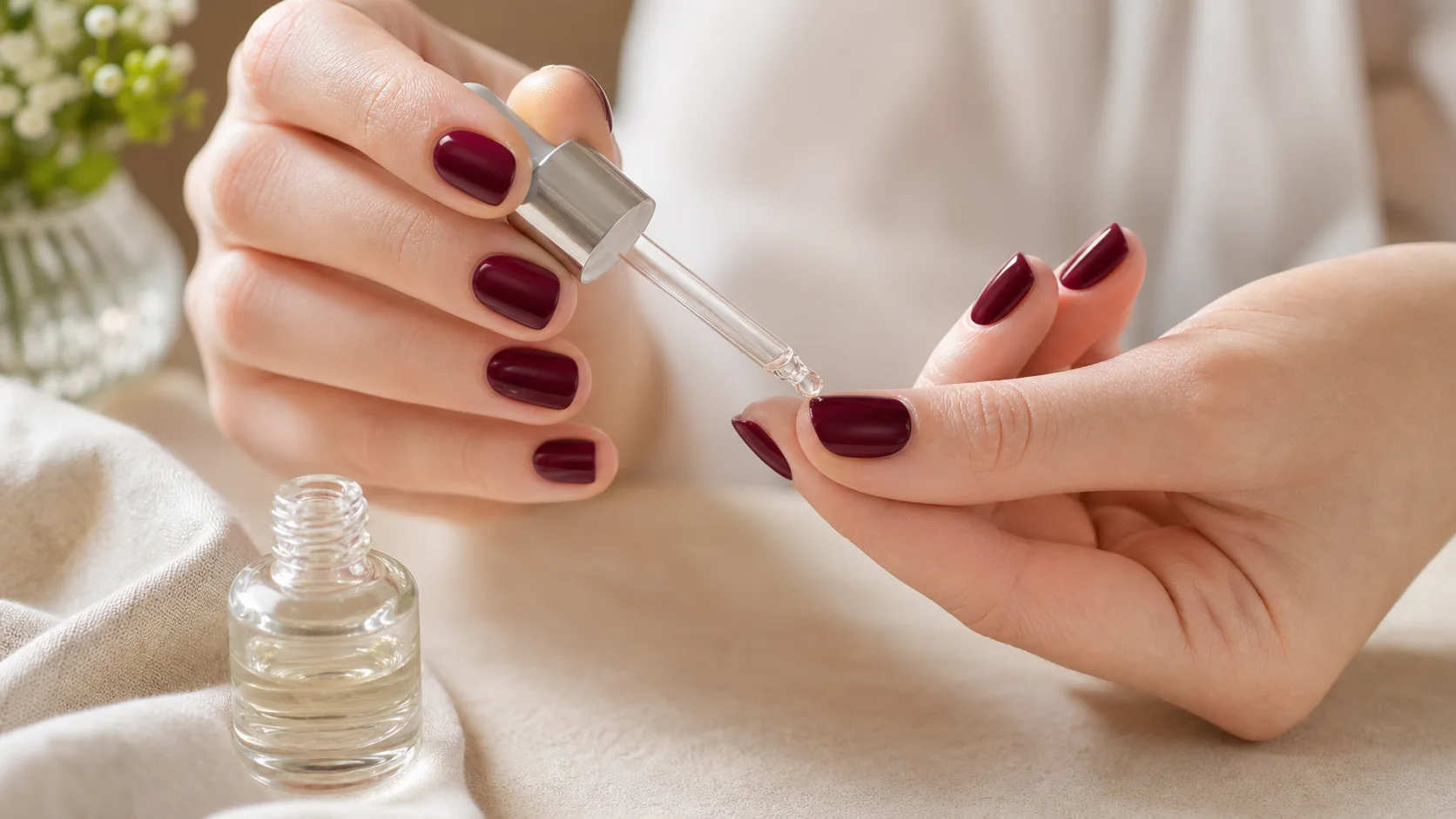
Cuticle oil can be one of the best aftercare steps for a gel manicure, but timing matters. If oil remains on the natural nail during preparation, it can interfere with adhesion. Once every gel layer is correctly cured and the manicure is finished, a small daily application around the nail folds should not undo a sound gel bond.
To understand how to prevent cuticle oil from lifting gel polish, separate preparation from aftercare. Keep oil, lotion, water, dust, and skin residue off the nail plate before application. Add oil only after the final coat has been fully cured and any finishing steps required by your gel system are complete.
Does Cuticle Oil Actually Lift Gel Polish?
Cuticle oil can contribute to lifting when it sits between the natural nail and the base coat. Gel needs a properly prepared surface to form a reliable bond. An invisible oily film can create weak areas where the product begins to separate.
Oil applied to the surrounding skin after a complete, properly cured service is different. It conditions dry nail folds and helps prevent hangnails. If a finished manicure lifts soon after aftercare oil is applied, the original weak point was often created by incomplete prep, gel touching skin, an incorrect cure, thick layers, or impact.
Oil may move into a gap that is already open, but it does not explain why an intact gel layer separated from a correctly prepared nail in the first place.
The Safe Timing Rule
Use this simple sequence:
- Complete dry nail preparation.
- Remove dust and surface oil as directed by the gel manufacturer.
- Apply base, color, and top coat without touching skin.
- Cure every layer with the compatible lamp for the specified time.
- Complete any final cleansing step required by the system.
- Then apply a small amount of cuticle oil to the surrounding skin.
Do not add oil between gel layers. Do not use it as a slip product during application. Avoid putting oil on your nails immediately before a salon appointment unless the technician specifically instructs you to do so.
Prepare Without Leaving an Oily Film
Start with clean, dry nails
Remove old product according to its instructions, then wash away visible residue if needed. Let the nails dry thoroughly. Avoid a long hand soak before gel because nails can absorb water and change slightly as they dry.
Move nonliving cuticle tissue off the nail plate
The cuticle is the thin nonliving tissue attached to the nail plate. If gel is applied over it, the product is bonded to skin residue rather than the nail. Gently remove only that residue. Do not cut the living proximal nail fold, and do not use aggressive scraping or filing.
Remove dust carefully
Fine dust can interrupt the bond just like oil. Use a clean, lint-free method recommended by the product brand. Check the sidewalls and the area near the base of the nail, where particles often remain.
Dehydrate only as directed
Many gel systems call for a nail cleanser or dehydrator. Follow the exact product instructions instead of combining several strong dehydrating products. Over-prepping can thin or irritate the nail and surrounding skin. After the final prep wipe, do not touch the nail plate with your fingertips.
Keep Gel Off the Skin
Gel that floods the cuticle area or sidewalls creates a raised edge. As the nail grows and the skin moves, that edge can catch and lift. Leave a narrow, even margin between product and skin. Use thin coats and control the amount on the brush.
If uncured gel touches skin, remove it completely before curing. Repeated skin contact with uncured gel products can increase the risk of acrylate allergy. Do not cure flooded product and plan to file it away later.
For home application, use only products intended for consumer use and follow every safety direction. If controlling the product near the skin is difficult, a qualified nail professional is the safer choice.
Use a Compatible Lamp and Cure Correctly
A lamp that turns on is not automatically suitable for every gel. Different systems use specific wavelengths, power, placement, and cure times. Use the lamp recommended for your gel system and follow the brand’s timing for each layer.
Apply coats thinly enough to cure as intended. Keep the whole hand in the correct position so sidewalls and thumbs receive the required light. Do not shorten the cure because the surface looks hard, and do not assume extra-long curing fixes an incompatible lamp.
Gel can feel firm at the surface while remaining insufficiently cured underneath. Incorrect curing may affect wear and can leave reactive ingredients in the product.
Apply Cuticle Oil After the Manicure
Once the final top coat is fully cured and any required cleansing is complete, place a tiny drop at the base of each nail. Massage it into the nail folds and sidewalls. You can also apply a small amount beneath the free edge if the natural nail is exposed.
You do not need to flood the nail. A controlled amount reduces slippery residue and keeps oil away from clothes and devices. If the top surface becomes oily, simply wipe the finished gel with a soft dry cloth. Do not scrub the edges.
A practical daily schedule
- Morning: use a small drop after washing and drying your hands.
- After wet work: reapply if the surrounding skin feels dry.
- Before bed: massage oil around the nail folds, then add hand cream.
Once or twice a day is a useful starting point. Adjust for your skin, work, climate, and product directions.
What Not to Do Before Your Next Gel Appointment
Daily oil use between manicures does not mean you must avoid nail care completely before a new set. The goal is simply to arrive with a clean surface.
- Do not apply oil or heavy hand cream immediately before application.
- Do not soak the nails for a long period before the appointment.
- Do not pick or peel off the previous gel.
- Do not aggressively buff the nail plate to remove shine at home.
- Do not assume a quick wipe can correct oil trapped beneath existing product.
If you applied oil earlier in the day, tell your nail professional. They can clean and prepare the nail according to their system.
Other Causes of Lifting That Oil Cannot Fix
Product touching skin
Lifting at the base or sides often begins where gel was cured against skin. Improve brush control and remove flooding before curing.
Cuticle residue on the plate
A thin, nearly invisible patch of tissue can create a weak bond. Gentle, complete prep matters more than aggressive filing.
Layers that are too thick
Heavy coats may not cure as the manufacturer intended. They can wrinkle, shrink, or remain soft below the surface.
An incompatible product mix
Combining a lamp, base, color, and top coat from unrelated systems can make cure performance harder to predict. A coordinated system is easier to troubleshoot.
Nail flexibility or structural stress
Very flexible nails can bend beneath a rigid coating. Long nails also create leverage at the free edge. A professional can assess whether the product and structure suit your natural nails.
Water, chemicals, and impact
Repeated wet work, cleaning chemicals, picking, and using nails as tools can weaken edges. Wear waterproof gloves for dishes and cleaning, and use the pads of your fingers for everyday tasks.
For more preparation and aftercare advice, explore the Glow Finds Daily nail guides.
Troubleshoot Lifting by Location
- At the cuticle line: look for skin contact, cuticle residue, oil, or a thick base layer.
- Along the sidewalls: check for flooding, dust, missed cure exposure, or repeated side impact.
- At the free edge: check nail flexibility, uncapped edges, filing, water exposure, and use of nails as tools.
- Across the whole nail: review prep, product compatibility, lamp compatibility, and cure time.
- On one finger only: consider hand position in the lamp and how that finger is used during daily tasks.
What to Do if Gel Has Already Lifted
Do not push oil beneath a lifted area and do not glue it down. Do not pick or peel the gel, since this can remove layers from the natural nail. A gap can collect moisture and debris.
Have the lifted product safely removed and repaired according to the gel system. If you notice a green, yellow, or dark discoloration, pain, swelling, or changes to the natural nail, remove the cosmetic covering with professional guidance and seek medical advice when appropriate.
Frequently Asked Questions
Can I use cuticle oil immediately after curing gel polish?
Yes, after the final coat is fully cured and all finishing steps specified by the manufacturer are complete. Apply it to the surrounding skin in a controlled amount.
Can oil soak through cured gel?
A correctly cured, intact gel coating should act as a continuous layer. Oil can move into an existing lifted edge, but routine aftercare oil is not usually the original cause of separation beneath a sound application.
Should I stop cuticle oil the day before gel application?
You can avoid oil close to the appointment to simplify prep, especially if your nail professional requests clean, product-free nails. What matters most is that no oil remains on the plate when base coat is applied.
Is hand cream safe over gel nails?
Yes, after the manicure is complete. Massage cream into the skin without forcing it under any lifted area. Before a new application, remove surface residue according to the gel system’s prep instructions.
Why did my gel lift after I began using oil?
The timing may be coincidental. Review where lifting began, how the nail was prepared, whether gel touched skin, coat thickness, lamp compatibility, curing, and daily impact. Oil can reveal an opening by collecting near it, but the gap may already have existed.
The Bottom Line
To prevent cuticle oil from lifting gel polish, keep oil off the natural nail during preparation and apply it only after the full gel system is correctly cured and finished. Use a small amount around the skin, not between layers or beneath lifted product. If lifting continues, investigate prep, skin contact, coat thickness, product and lamp compatibility, curing, and daily wear rather than abandoning useful cuticle aftercare.