
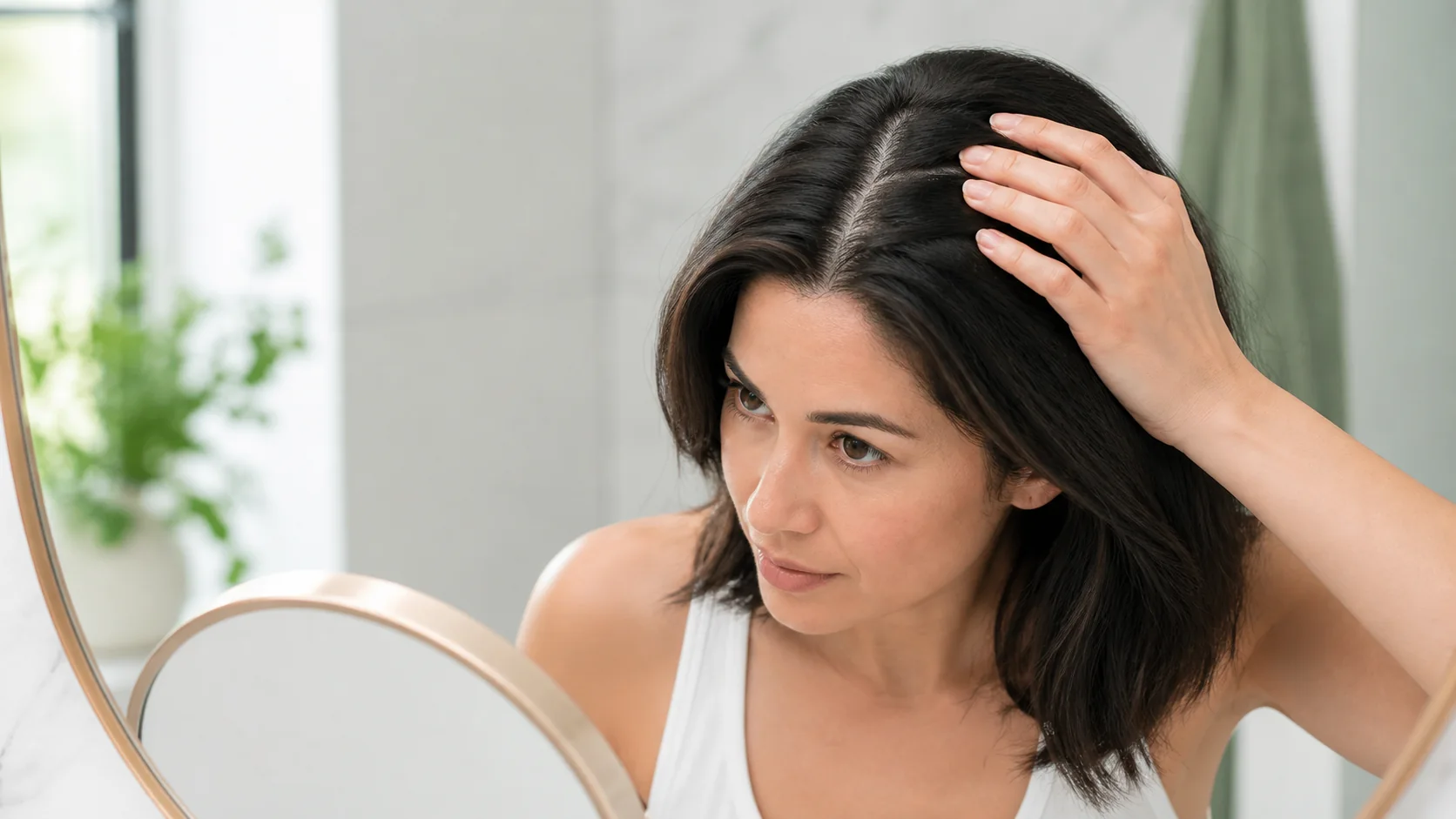
Learning how to balance a flaky scalp with oily roots begins with one important fact: flakes do not always mean your scalp is dry. Dandruff and seborrheic dermatitis commonly affect oil-rich areas and can produce white or yellowish scale, itching, and greasy roots. Adding more oil may make that combination heavier without treating its cause.
The practical goal is to cleanse and treat the scalp while protecting the hair lengths from unnecessary dryness. This guide explains how to distinguish common causes, build a wash routine, use dandruff shampoo correctly, and know when to see a dermatologist.
Why Can a Scalp Be Oily and Flaky?
Sebum is produced by glands in the scalp. It can collect around roots and mix with shed skin cells, sweat, styling residue, and microorganisms. The resulting flakes may look dry even though oil is involved. Seborrheic dermatitis is a common inflammatory condition associated with oily areas, scale, and a reaction involving Malassezia yeast that normally lives on skin.
Other possibilities include genuinely dry skin, psoriasis, eczema, contact dermatitis, product buildup, or incomplete shampoo rinsing. These need different approaches, so a cause-first routine is safer than treating every flake with oil or a scrub.
Compare the Most Common Patterns
- Dandruff or seborrheic dermatitis: Greasy or dry-looking white to yellow flakes, itch, and possible redness around the scalp, ears, eyebrows, or sides of the nose.
- Dry scalp: Fine loose flakes with tight, dry-feeling skin and less obvious oil.
- Product buildup: Waxy, sticky, powdery, or gritty residue concentrated where sprays, oils, gels, or dry shampoo were applied.
- Contact irritation: Burning, redness, bumps, or sudden itching after a new dye, fragrance, oil, adhesive, or styling product.
- Psoriasis: Thicker, more defined scale or plaques that may extend beyond the hairline.
Do not pick at flakes to identify them. Use bright light and note where they occur, how quickly oil returns, what triggers symptoms, and whether the skin is inflamed.
Build a Scalp-First Wash Routine
1. Wash According to Oil and Symptoms
An oily, flaky scalp often needs consistent cleansing rather than longer gaps between washes. There is no universal schedule. Fine straight hair may need washing more often than tightly coiled hair, while exercise, climate, hats, and styling products can change the timing.
Wash when roots are noticeably oily, the scalp itches, or residue is accumulating. Delaying until oil and scale are heavy can make removal harder. For more help with sebum management, see this guide to caring for oily hair.
2. Put Shampoo on the Scalp
Wet the scalp thoroughly, then apply shampoo along several parts. Massage with finger pads, not nails. Focus on the scalp and root area. Let the runoff clean the lengths instead of scrubbing fragile ends.
If the first lather disappears quickly because of heavy oil or product, rinse and shampoo a second time. Thorough rinsing is essential because leftover cleanser can also irritate the scalp.
3. Condition the Lengths, Not the Roots
Apply conditioner from the mid-lengths to the ends. This protects dry hair while keeping heavy formulas away from oily roots. Fine hair may need a lightweight conditioner and complete rinsing. Dense curls and coils may need richer conditioning on the lengths, but the scalp still does not need to be coated.
How to Use Dandruff Shampoo Correctly
Dandruff shampoos use different active ingredients, so follow the label or a dermatologist’s instructions. Apply the product to the scalp, not just the hair. Many formulas need several minutes of contact time before rinsing. Washing it off immediately can reduce its usefulness.
Frequency depends on the formula, symptoms, and hair type. Straight or wavy hair may tolerate more frequent medicated washing than curly or tightly coiled hair. To reduce dryness, keep the treatment on the scalp and condition the lengths afterward.
If one active ingredient does not help after correct, consistent use, a dermatologist may suggest another. Do not combine several medicated shampoos, leave-on acids, oils, and scrubs without guidance.
A Simple Weekly Framework
- During a flare: Use the recommended dandruff shampoo on schedule, allow the directed contact time, and protect the lengths with conditioner.
- Between treatment washes: Use a gentle regular shampoo when oil or sweat requires cleansing.
- Once controlled: Some people continue a maintenance dandruff wash weekly or as recommended.
- After exercise: Dry sweat promptly and wash when the scalp remains oily or itchy.
Track symptoms for two to four weeks instead of changing products every few days. Note wash dates, shampoo used, contact time, oil return, itching, and visible scale.
Should You Oil a Flaky, Oily Scalp?
Not by default. Oil can soften some dry scale, but it may also add residue and does not treat every cause of flaking. With dandruff or seborrheic dermatitis, routine scalp oiling can make it harder to control greasiness for some people.
If a dermatologist recommends a scale-softening treatment, use the specific product and timing they provide. Otherwise, place oils on dry hair ends rather than the scalp. Stop any product that increases itch, redness, or flakes.
Dry Shampoo, Scalp Scrubs, and Brushes
Dry shampoo absorbs oil but does not remove flakes, dead skin, microorganisms, or product. On a flaky scalp, repeated powder can mix with oil and create more visible residue. Use it sparingly, only on dry roots, and wash it out with shampoo and water.
Scalp scrubs are not necessary for everyone. Coarse particles and vigorous rubbing can irritate inflamed skin. A soft shampoo massage is usually safer. If scale is thick and adherent, ask a dermatologist about a suitable scale-softening treatment instead of scraping.
Use scalp brushes gently, if at all. Choose soft flexible tips and never use them on sores, painful bumps, or active inflammation.
Protect Dry Lengths Without Feeding Oily Roots
Combination hair needs two zones of care. Treat the scalp for oil and flakes, then moisturize the lengths separately. Before shampooing, you can apply conditioner to very dry ends as a buffer. After washing, use a small amount of leave-in from the ears downward.
Detangle with conditioner and start at the ends. If your strands are fine or fragile, follow this method for detangling fine hair without breakage.
Avoid brushing scalp oil through irritated roots in an attempt to distribute it. Gentle brushing can move ordinary sebum, but it does not treat inflammatory scale and may loosen more visible flakes.
Common Mistakes
- Assuming every flake means dryness: Oily dandruff is common and needs a different approach.
- Washing less to train the scalp: Oil production is not reliably retrained by letting buildup accumulate.
- Applying oil after every wash: This may disguise flakes temporarily while adding residue.
- Scratching with nails: Scratches worsen irritation and increase infection risk.
- Putting conditioner on the scalp: Rich formulas can weigh down oily roots.
- Using medicated shampoo like ordinary shampoo: It may need targeted application and contact time.
- Stacking dry shampoo: It absorbs oil but cannot replace cleansing.
- Changing everything at once: You will not know which product helped or irritated the scalp.
Lifestyle and Styling Adjustments
Wash pillowcases, bonnets, hats, brushes, and combs regularly. Avoid keeping the scalp damp after workouts or sleeping with wet roots. Minimize tight styles during an itchy flare, and choose fragrance-free products if your skin is reactive.
Stress and weather changes can affect some scalp conditions. A simple routine used consistently is usually easier to evaluate than a crowded routine. These golden rules of hair care can help keep manipulation and product use sensible.
When to See a Dermatologist
Seek professional care if flakes persist despite several weeks of correct dandruff-shampoo use, or if you have marked redness, swelling, pain, sores, pus, thick plaques, broken hairs, or hair loss. Also get help when symptoms spread to the face, ears, or body, or when a product reaction is severe.
A dermatologist can distinguish seborrheic dermatitis from psoriasis, eczema, contact dermatitis, fungal infection, and other conditions. Prescription treatment may be needed when over-the-counter care is not enough.
Frequently Asked Questions
Can an oily scalp really be flaky?
Yes. Dandruff and seborrheic dermatitis often occur in oily areas. Oil can mix with shed skin and create visible white or yellowish scale.
Should I wash oily, flaky roots every day?
Some people benefit from frequent washing, but the ideal schedule depends on hair type, symptoms, and treatment. Follow the medicated shampoo label or your dermatologist’s advice.
Can I put conditioner on a flaky scalp?
Regular hair conditioner is usually best kept on the lengths and ends. If the scalp needs a leave-on treatment, use one designed for that purpose and suited to the diagnosed condition.
Why does dry shampoo make my flakes worse?
Powder can combine with oil, dead skin, and existing residue. It does not cleanse the scalp, so repeated use may make flakes and buildup more visible.
How long should dandruff shampoo stay on?
Follow the product label or medical advice. Many formulas need several minutes of contact with the scalp before rinsing.
The Bottom Line
The best way to balance a flaky scalp with oily roots is to treat the scalp and hair lengths as separate zones. Cleanse oily roots consistently, use dandruff treatment correctly when appropriate, keep conditioner on the lengths, and avoid covering flakes with oil or repeated dry shampoo. If inflammation, thick scale, or persistent symptoms continue, get a diagnosis instead of escalating home treatments.