
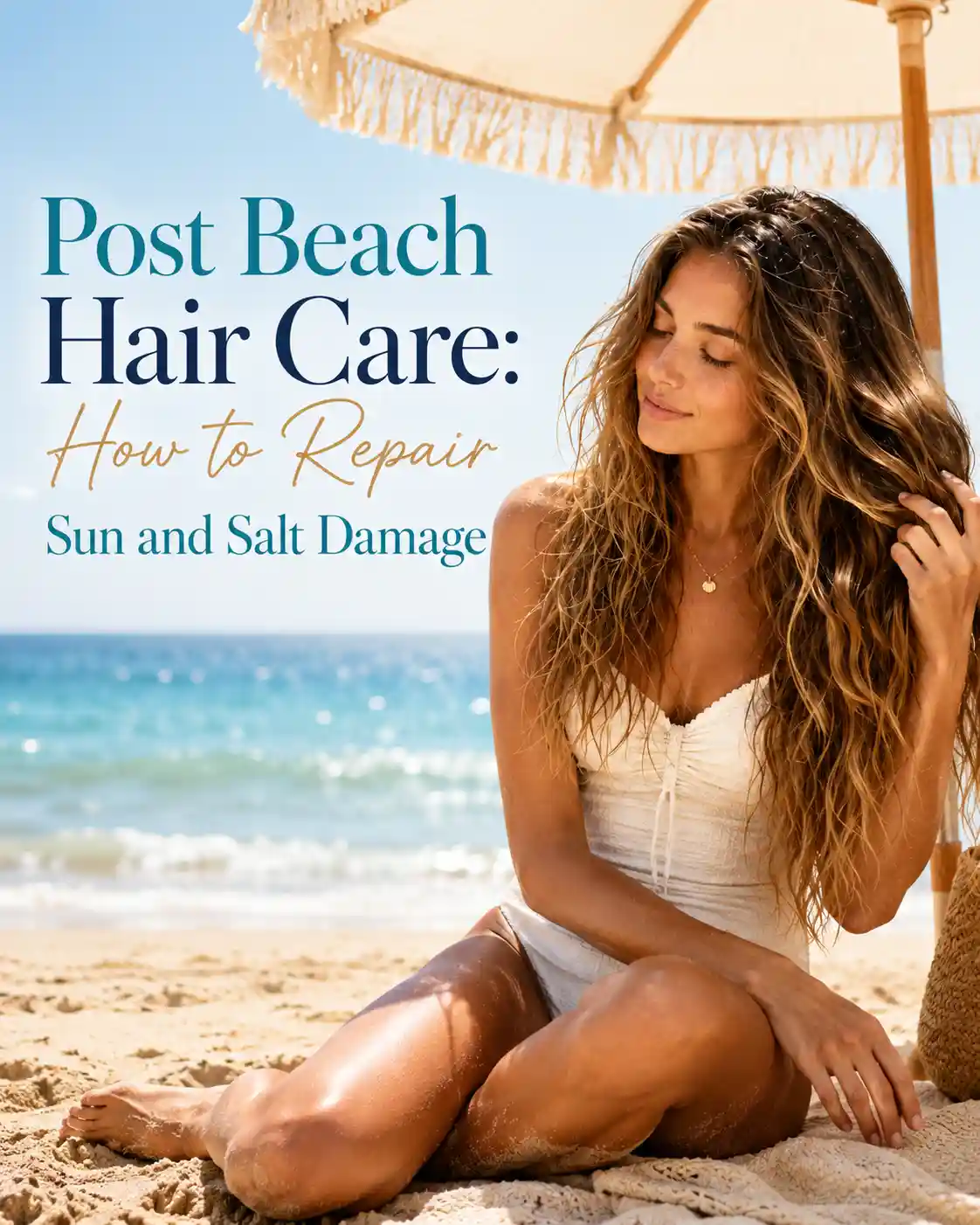
A few days at the beach can leave your skin glowing and your hair looking like it lost a fight with a saltwater rope. Sun, salt, wind, and chlorine all pull moisture out of your strands, and the result is that straw-like texture you notice the moment you get home. Post beach hair care matters because this damage does not fix itself. In this guide, we will walk through exactly how to rinse, cleanse, and repair your hair after a beach trip so it feels smooth and healthy again, not like it needs its own vacation to recover.
Quick Picks
- Fastest Fix: Fresh water rinse right after swimming
- Deepest Clean: Clarifying shampoo used once
- Best Repair Step: Deep conditioning hair mask
- Best Daily Habit: Leave-in conditioner with UV filter
- Best for Damaged Ends: Trim plus weekly hydrating mask
Why Beach Hair Needs Extra Care
Salt water draws moisture out of the hair shaft, and UV rays break down the proteins that keep hair strong and smooth. Chlorine from pools adds another layer of dryness on top of that. Together, these three factors leave hair porous, rough, and more likely to tangle or break. Understanding this helps explain why a normal shampoo and go routine is not enough right after a beach trip.
Step 1: Rinse Hair With Fresh Water Right Away
If possible, rinse your hair with clean water as soon as you get out of the ocean or pool. Salt and chlorine start to dry and settle into the hair once it air dries, which makes them harder to remove later. A quick rinse before that happens can reduce how much residue builds up in your strands.
Step 2: Use a Clarifying Shampoo Once
Back home, a clarifying shampoo helps strip out leftover salt, sand, sunscreen, and product buildup that a regular shampoo may not fully remove. This should be a one time reset rather than a daily habit, since clarifying formulas can be drying with frequent use. After this single wash, switch back to a gentle, sulfate-free shampoo for regular days.
Step 3: Deep Condition to Rebuild Moisture
Follow the clarifying wash with a deep conditioning mask or hair butter treatment. Sun and salt exposure strip natural oils from the hair, so this step is about putting moisture back rather than just detangling. Leaving the mask on for the time recommended on the packaging gives it a real chance to work into the hair shaft.
Step 4: Add a Leave-In Conditioner or Hair Oil
A leave-in conditioner or a lightweight oil such as argan, coconut, or jojoba can help seal in moisture after washing. This is especially useful if you are still spending time outdoors, since it adds a bit of protection against further dryness. Based on the ingredients most beach-recovery products list, oils that absorb quickly tend to work better for daily use than heavier, greasy formulas.
Step 5: Skip Heat Styling for a Week
Sun-damaged hair is already weaker than usual, so adding heat from a flat iron or blow dryer can make breakage worse. Giving your hair a short break from heat styling allows it to recover some strength before you go back to your normal routine.
Step 6: Detangle Gently From the Ends
Dry, sun-exposed hair tangles more easily and snaps more easily too. Using a wide-tooth comb and starting from the ends before working up toward the roots puts less stress on weakened strands compared to brushing straight through from the top.
Step 7: Trim Split Ends If Needed
If your hair feels rough or straw-like at the tips even after conditioning, a small trim can help. UV exposure weakens the outer layer of the hair cuticle, and split ends do not repair themselves with products alone. A trim removes the damaged part so the rest of your routine has less to fight against.
Step 8: Do Not Forget the Scalp
Sun and salt water can dry out the scalp as well as the hair, which sometimes shows up as flaking or itchiness after a beach trip. A gentle scalp oil massage or a light exfoliating treatment can help rebalance things, especially if you spent multiple days in the sun without a hat.
Common Mistakes to Avoid
- Washing hair with regular shampoo without ever clarifying first
- Skipping the fresh water rinse until hours after swimming
- Using heavy oils that weigh hair down instead of absorbing
- Going straight back to heat styling the day you get home
- Ignoring the scalp while only focusing on hair strands
- Assuming one hydrating mask will undo a full week of sun exposure
How Long Does Beach Hair Recovery Take
Mild dryness often improves within a few days of consistent conditioning. More noticeable damage, such as rough texture or split ends built up over a longer trip, may take a couple of weeks of regular deep conditioning and reduced heat styling to fully bounce back. Buyers should check their hair type and damage level before expecting instant results from any single product.
FAQs
How do I get salt water out of my hair fast?
Rinse with fresh water as soon as possible, then follow up with a clarifying shampoo when you are able to properly wash your hair. The sooner the salt is rinsed, the less time it has to dry and settle into the strands.
Is it bad to let hair air dry after the beach?
Air drying itself is not harmful, but letting salt water or chlorine dry into the hair without rinsing first can leave residue that dries out the strands further. Rinse before letting hair air dry when possible.
Should I use a hair mask before or after the beach?
A leave-in treatment or lightweight oil before sun exposure can act as a light barrier, while a deeper hydrating mask is usually more effective after the trip once hair needs real moisture replacement.
Can beach hair damage be permanent?
Damage such as split ends usually needs to be trimmed rather than repaired, but general dryness and roughness from sun and salt exposure can usually be improved with consistent conditioning and a short break from heat styling.
How often should I use a clarifying shampoo after a beach trip?
Once is usually enough right after the trip. Using it too often can dry hair out further, so switch back to a gentle, sulfate-free shampoo for regular washing after that first reset.
Do I need special products for beach hair care, or will regular conditioner work?
Regular conditioner can help with basic moisture, but a deeper hydrating mask and a leave-in product tend to address sun and salt damage more directly. This may be worth considering if your hair feels unusually dry after the trip.
Final Verdict
Post beach hair care does not need to be complicated, but it does need to happen soon after your trip rather than being put off. Rinsing early, clarifying once, and following up with real hydration through a mask and leave-in product covers most of what sun and salt damage require. If your ends still feel rough after that, a small trim and a short break from heat styling usually finish the job.