
You can’t buy thicker, longer hair in a bottle, but you can eat it. If you’re tired of expensive hair treatments and looking for real, lasting results, it’s time to pay attention to what’s on your plate. The truth? Beautiful hair starts from the inside out.
Your hair grows from living cells in hair follicles beneath your scalp, and like every other part of your body, those cells need proper nutrition to thrive. When you nourish your body with the right foods, you’re essentially feeding your hair at the source. The result? Stronger strands, less breakage, and faster growth.
In this guide, I’m sharing 7 natural foods proven to boost hair growth, plus a simple meal plan to make it easy to incorporate them into your daily routine. No supplements required just real food that works.
Why Food Matters for Hair Growth
Understanding Your Hair Growth Cycle
Your hair doesn’t grow continuously. Instead, it cycles through three phases:
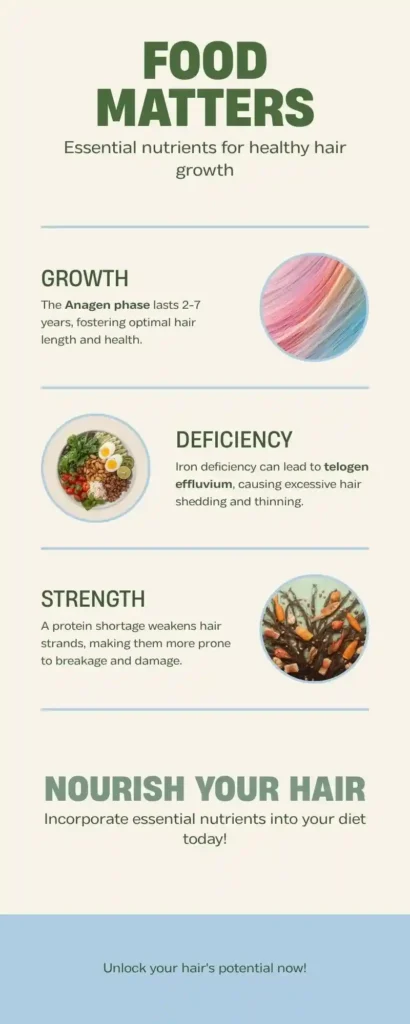
Anagen (Growth Phase): This lasts 2-7 years and is when your hair is actively growing. This is the phase you want to optimize with good nutrition.
Catagen (Transition Phase): A short 2-3 week period where growth stops.
Telogen (Shedding Phase): Lasts about 2-3 months, and this is when hair naturally falls out to make room for new growth.
Here’s what’s important: the length of your anagen phase determines how long your hair can grow. By providing optimal nutrition during this phase, you’re supporting healthier, stronger growth and potentially extending how long each strand can stay on your head.¹
Common Nutrient Deficiencies That Slow Hair Growth
According to dermatological research, several nutrient deficiencies are directly linked to hair loss and slow growth:
Iron Deficiency: Low iron can trigger telogen effluvium, a condition where hair prematurely enters the shedding phase. Women are especially at risk due to menstruation.²
Protein Shortage: Since hair is made primarily of a protein called keratin, insufficient protein intake means your body can’t build strong hair strands.
Biotin Deficiency: Biotin (B7) supports keratin production. Studies show biotin supplementation can improve hair strength and growth, but getting it from food is ideal.³
Zinc Deficiency: Zinc deficiency has been directly linked to hair loss and scalp problems. It’s essential for hair tissue growth and repair.⁴
Vitamin D Insufficiency: Research indicates vitamin D plays a role in the hair growth cycle and follicle health.⁵
B Vitamin Deficiency: B vitamins (especially B12 and folate) provide energy for hair follicles and support the growth cycle.
The good news? You don’t need expensive supplements or medical interventions. The right foods deliver all these nutrients in bioavailable forms your body can actually use.
7 Best Natural Foods for Hair Growth
1. Eggs: The Biotin Powerhouse
Why they work: Eggs are one of the most nutrient-dense foods for hair growth. They’re packed with high-quality protein, biotin, selenium, and choline all essential for strong, growing hair.
Key nutrients:
- Protein: Building block for keratin
- Biotin: Supports hair strength and reduces breakage
- Selenium: Antioxidant that protects hair follicles
- Choline: Supports scalp health
How to use it: Aim for 1-2 eggs daily. Scramble them with spinach for a nutrient-packed breakfast, add them to salads, or eat hard-boiled eggs as a snack.
Pro tip: Eat the whole egg. The yolk contains biotin and choline; the white provides lean protein.
2. Fatty Fish (Salmon, Mackerel, Sardines): Scalp Nourishment
Why they work: Fatty fish are rich in omega-3 fatty acids, which reduce inflammation and improve blood flow to the scalp. Better circulation means better nutrient delivery to hair follicles.
Key nutrients:
- Omega-3 fatty acids: Anti-inflammatory, improve scalp circulation
- Vitamin D: Regulates hair growth cycle
- Selenium: Protects follicles from oxidative stress
- Protein: Hair structure support
How to use it: Aim for 2-3 servings of fatty fish per week (a serving is 3-4 ounces). Try salmon salads, fish tacos, or simply baked with vegetables.
Budget tip: Canned sardines and mackerel are affordable alternatives to fresh salmon and equally nutritious.
3. Spinach & Dark Leafy Greens: Iron & Folate
Why they work: Dark leafy greens are iron powerhouses, and iron is critical for the hair growth phase. They also contain folate, which supports cell division in hair follicles.
Key nutrients:
- Iron: Essential for anagen (growth) phase
- Folate: Supports follicle cell division
- Vitamins A & C: Promote sebum production (scalp’s natural oil)
- Antioxidants: Protect against oxidative stress
How to use it: Add spinach to smoothies, salads, pasta, soups, or sauté it as a side dish. Aim for at least one serving daily.
Important: Pair iron-rich foods with vitamin C sources (citrus, berries, tomatoes) to improve iron absorption. Your body absorbs iron from plant sources better when combined with vitamin C.⁶
4. Sweet Potatoes: Vitamin A for Scalp Health
Why they work: Sweet potatoes are packed with beta-carotene, which your body converts to vitamin A. Vitamin A regulates sebum production and supports scalp health a healthy scalp means healthy hair growth.
Key nutrients:
- Beta-carotene (Vitamin A): Regulates sebum, supports follicle cells
- Vitamin C: Collagen production
- Potassium: Supports overall circulation
- Fiber: Supports gut health (better absorption of other nutrients)
How to use it: Roast them as a side dish, add to curries, make sweet potato fries, or blend into smoothies. Aim for 1-2 servings per week.
Note: Your body can convert beta-carotene from sweet potatoes into vitamin A, but absorption is better when eaten with a fat source (olive oil, avocado, nuts).
5. Nuts & Seeds (Almonds, Pumpkin Seeds, Walnuts): Biotin & Zinc
Why they work: These small nutritional powerhouses pack biotin, zinc, selenium, and omega-3s into convenient snacks. They’re also shelf-stable and budget-friendly.
Key nutrients:
- Biotin: Hair strength and growth
- Zinc: Follicle health and hair loss prevention
- Selenium: Antioxidant protection
- Omega-3s (especially in walnuts): Scalp health
How to use it:
- Almonds: 1 ounce (23 almonds) daily as a snack
- Pumpkin seeds: Sprinkle on salads, yogurt, or eat by the handful
- Walnuts: Add to oatmeal, salads, or baked goods
Budget tip: Buy in bulk and store properly to keep them fresh.
6. Chicken & Lean Meat: Protein & B12
Why they work: Meat is one of the most bioavailable sources of protein, zinc, iron, and B12 all critical for hair growth. B12 especially is hard to get from plant sources, making meat particularly valuable.
Key nutrients:
- High-quality protein: Hair structure
- Iron: Growth phase support
- Zinc: Follicle health
- B12: Hair growth and preventing thinning
How to use it: Aim for 3-4 ounces (about the size of your palm) of lean meat 4-5 times per week. Try grilled chicken breast, lean ground turkey, or grass-fed beef.
Quality matters: Grass-fed and pasture-raised meat has higher omega-3 content than grain-fed, providing added scalp benefits.
7. Legumes (Lentils, Chickpeas, Black Beans): Plant-Based Protein & Zinc
Why they work: If you’re vegetarian or want a budget-friendly protein option, legumes deliver protein, iron, zinc, and folate. They’re also packed with fiber for gut health, which improves nutrient absorption overall.
Key nutrients:
- Plant-based protein: Hair structure (though combine with grains to get complete protein)
- Iron: Growth phase support
- Zinc: Follicle and scalp health
- Folate: Cell division in follicles
- Budget-friendly: Dried legumes are incredibly affordable
How to use it: Add to soups, salads, curries, or make hummus. Aim for 1-2 servings per week (a serving is ½ cup cooked).
Pro tip: Pair legumes with grains (rice and beans, pita and hummus) to create complete proteins with all essential amino acids.

Bonus: Vitamin-Rich Foods for Extra Hair Growth Support
Vitamin C Sources (for Collagen Production)
Collagen is essential for hair structure. Eat citrus fruits, berries, bell peppers, and kiwi to support collagen synthesis.
Vitamin E Sources (Antioxidant Protection)
Protect hair from oxidative stress with avocados, sunflower seeds, and olive oil.
Additional Zinc Sources
Beyond nuts and seeds: oysters, beef, pumpkin seeds, cashews, and dark chocolate.
The Hair Growth Diet: Simple 3-Day Meal Plan
You don’t need complicated recipes or supplements. Here’s how to practically incorporate these foods:
Day 1
- Breakfast: Scrambled eggs with spinach and whole grain toast
- Snack: Almonds and blueberries
- Lunch: Salmon salad with mixed greens, tomatoes, and olive oil dressing
- Snack: Hummus and veggie sticks
- Dinner: Grilled chicken with roasted sweet potato and broccoli
Day 2
- Breakfast: Oatmeal with walnuts, berries, and honey
- Snack: Hard-boiled eggs and an apple
- Lunch: Lentil soup with spinach
- Snack: Pumpkin seeds and dark chocolate
- Dinner: Ground turkey tacos with beans on whole grain tortillas
Day 3
- Breakfast: Greek yogurt with granola and berries
- Snack: Almonds and orange slices
- Lunch: Tuna salad (or canned salmon) with mixed greens and avocado
- Snack: Roasted chickpeas
- Dinner: Grilled mackerel with roasted vegetables and quinoa
The key point: You don’t need special supplements or extreme diets. Real, whole foods work.
Pro Tips for Maximum Hair Growth Results
Consistency Beats Perfection
Results take time. Hair grows about ½ inch per month, so expect to see visible improvements in 3-6 months of consistent nutrition. Don’t give up after a week.
Pair Foods Strategically
- Iron + Vitamin C = better absorption (spinach + orange juice)
- Beta-carotene + Fat = better absorption (sweet potato + olive oil)
- Protein + B vitamins = better growth support (chicken + lentils)
Hydration Matters
Drink plenty of water. Hair follicles need proper hydration to function. Aim for 8-10 glasses daily.
Don’t Forget Sleep & Stress Management
Hair growth happens during rest. Combine good nutrition with 7-9 hours of sleep and stress-reducing activities for optimal results.
What NOT to Eat (If You Want Faster Hair Growth)
Ultra-Processed Foods: Strip nutrients and add inflammatory ingredients.
Excess Sugar: Spikes inflammation and can trigger hair loss.
Crash Diets: Deprive your hair of essential nutrients. Your hair is the last place your body sends nutrients during restriction.
High-Sodium Foods: Can affect hydration and nutrient balance.
Trans Fats: Impair circulation and inflammation.
The Bottom Line: Food Is the Foundation
Your hair’s health is a direct reflection of your nutritional status. You can use the best shampoos and conditioners on the market, but if you’re not feeding your body (and your hair follicles) properly, results will be limited.
The seven foods in this guide aren’t magic bullets, but they’re backed by science and dermatological research. They’re affordable, accessible, and produce real results when consumed consistently.
Start simple: Pick 2-3 of these foods and commit to incorporating them daily for the next month. Notice how your hair feels stronger, shinier, and grows noticeably longer. Then add more foods as you build the habit.
Beautiful, fast-growing hair doesn’t come from a salon. It comes from your kitchen.
References
¹ National Institute of Arthritis and Musculoskeletal and Skin Diseases (NIAMS). Hair Disorders. U.S. Department of Health and Human Services. www.niams.nih.gov
² Cleveland Clinic. Telogen Effluvium. Medical Resources. Retrieved from www.clevelandclinic.org
³ Zempleni, J., Wijeratne, S. S., & Hassan, Y. I. (2009). “Biotin and biotinidase deficiency.” Expert Review of Endocrinology & Metabolism, 4(6), 571-585. National Center for Biotechnology Information. www.ncbi.nlm.nih.gov
⁴ Prasad, A. S. (2008). “Zinc in human health: effect of zinc on immune cells.” Molecular Medicine, 14(5-6), 353-357. National Institutes of Health. www.nih.gov
⁵ Amor, K. T., Rashid, R. M., & Mirmirani, P. (2010). “Does D matter? The role of vitamin D in hair disorders and hair follicle cycling.” Dermatology Online Journal, 16(2). www.dermatologyonline.org
⁶ Institute of Medicine. Dietary Reference Intakes for Energy, Carbohydrate, Fiber, Fat, Fatty Acids, Cholesterol, Protein, and Amino Acids. National Academies Press. www.nap.edu